“Fantastica” 18th edition of Quadriennale d’Arte of Rome
BRH+ designs the layout for the 18th edition of the Quadriennale d’arte, creating the exhibition architecture for the shows “Fantastica” and “I giovani e i maestri. La Quadriennale del 1935” at the Palazzo Esposizioni in Rome.
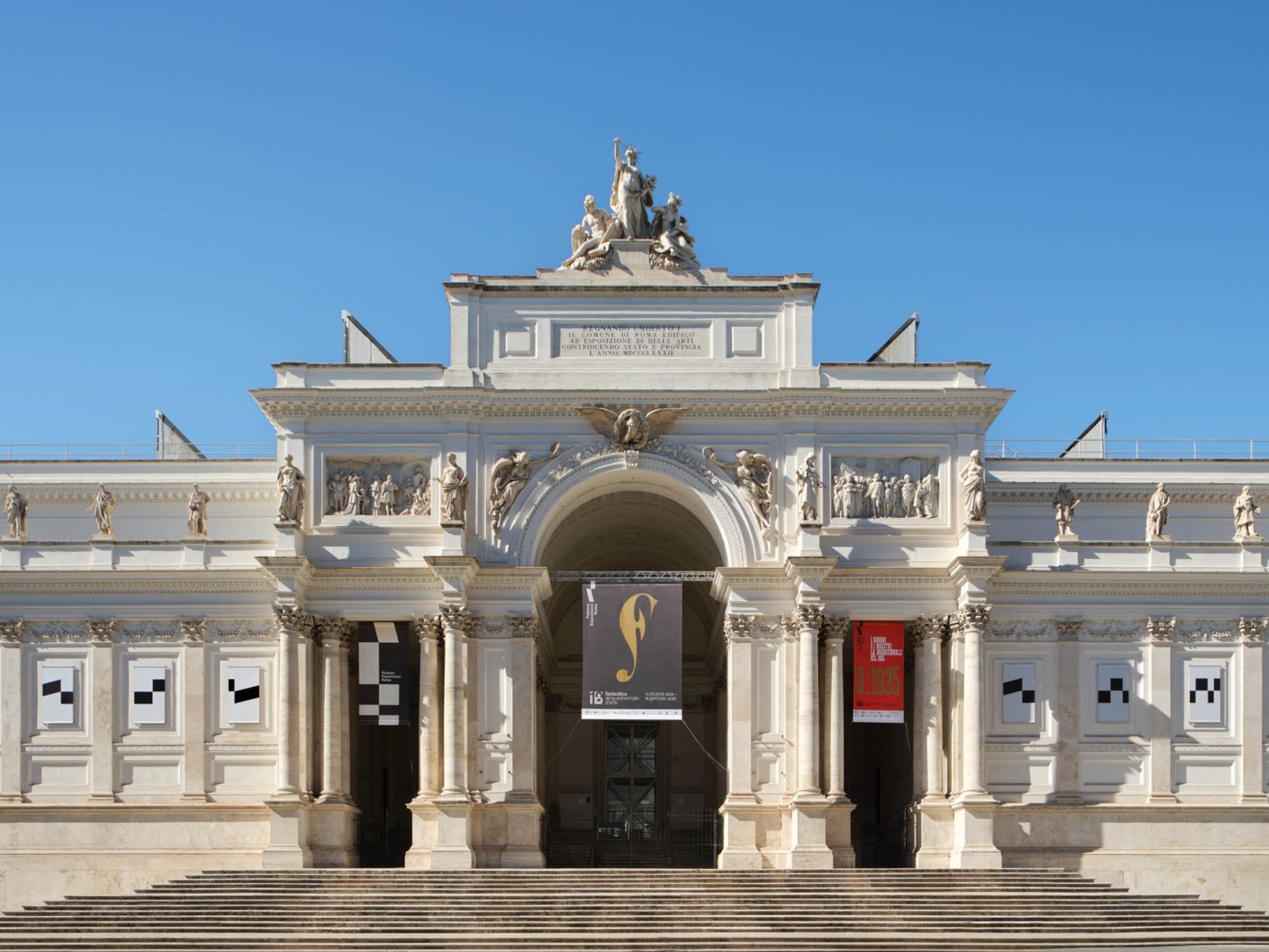
The Quadriennale d’arte, a historic and prestigious exhibition of contemporary Italian art, presents the program of its 18th edition at the Palazzo Esposizioni in Rome with an exhibition design by BRH+. The exhibition unfolds across two major shows: “Fantastica,” devoted to the Italian art scene after the 2000s, and “I giovani e i maestri. La Quadriennale del 1935,” a tribute to the edition that marked a turning point in Italian art during the 1930s. BRH+ designs a dual intervention that engages with the monumental setting of the Palazzo Esposizioni, interpreting the visions of the curators and artists through narrative spaces that are both precise and balanced, yet open and fluid.
“Fantastica”
A Plural Map of Contemporary Art
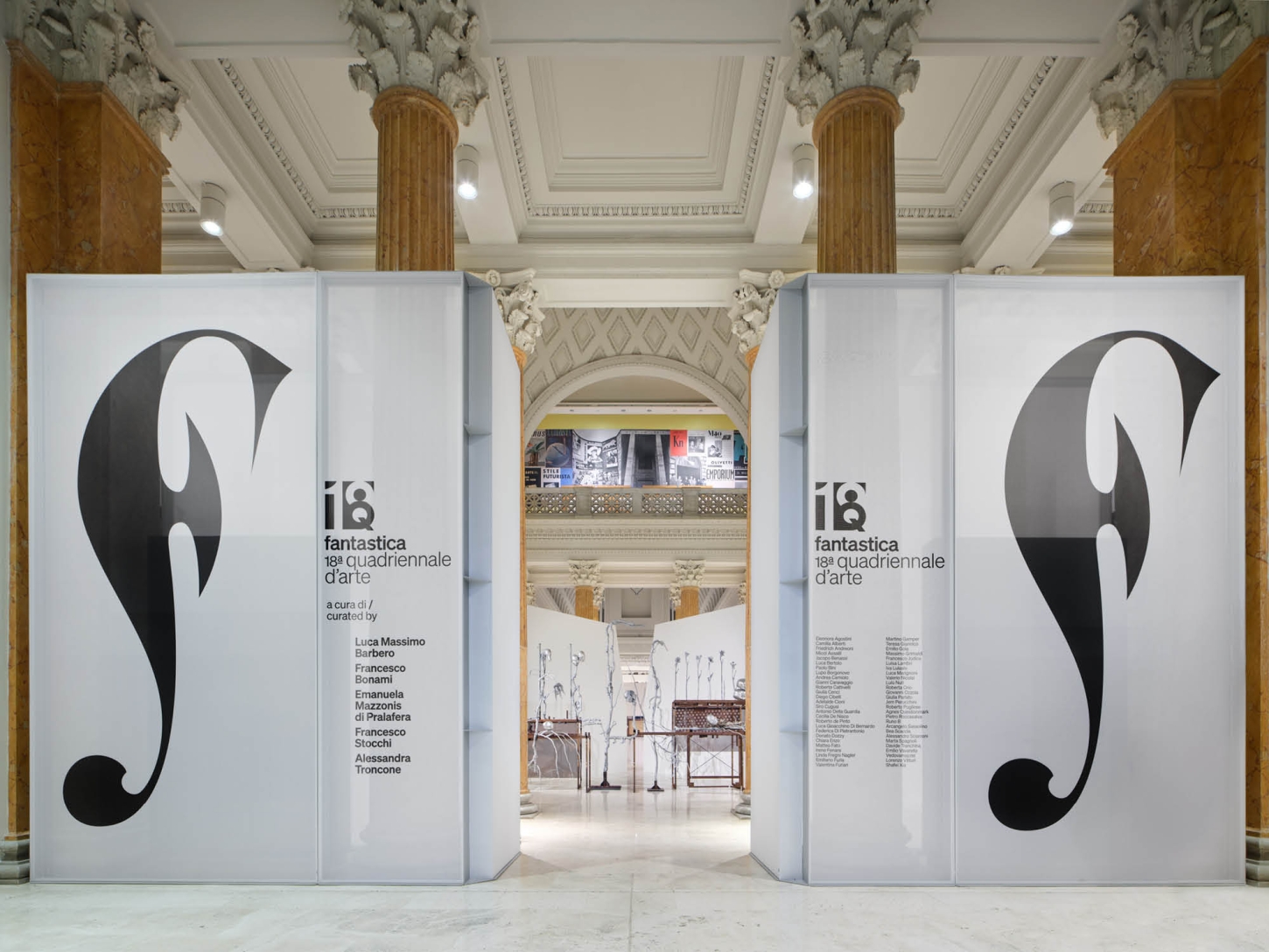
The main exhibition takes its title from an idea by Luca Beatrice, President of the Quadriennale, who passed away prematurely in January 2025. His vision deeply inspired this edition, having selected its curators and imagined it as a major opportunity to showcase the rich plurality of languages that define contemporary artistic expression. Presented on the first floor of the Palazzo Esposizioni, “Fantastica” explores the landscape of Italian contemporary art since the 2000s through five distinct curatorial chapters, developed by Luca Massimo Barbero, Francesco Bonami, Emanuela Mazzonis di Pralafera, Francesco Stocchi, and Alessandra Troncone.
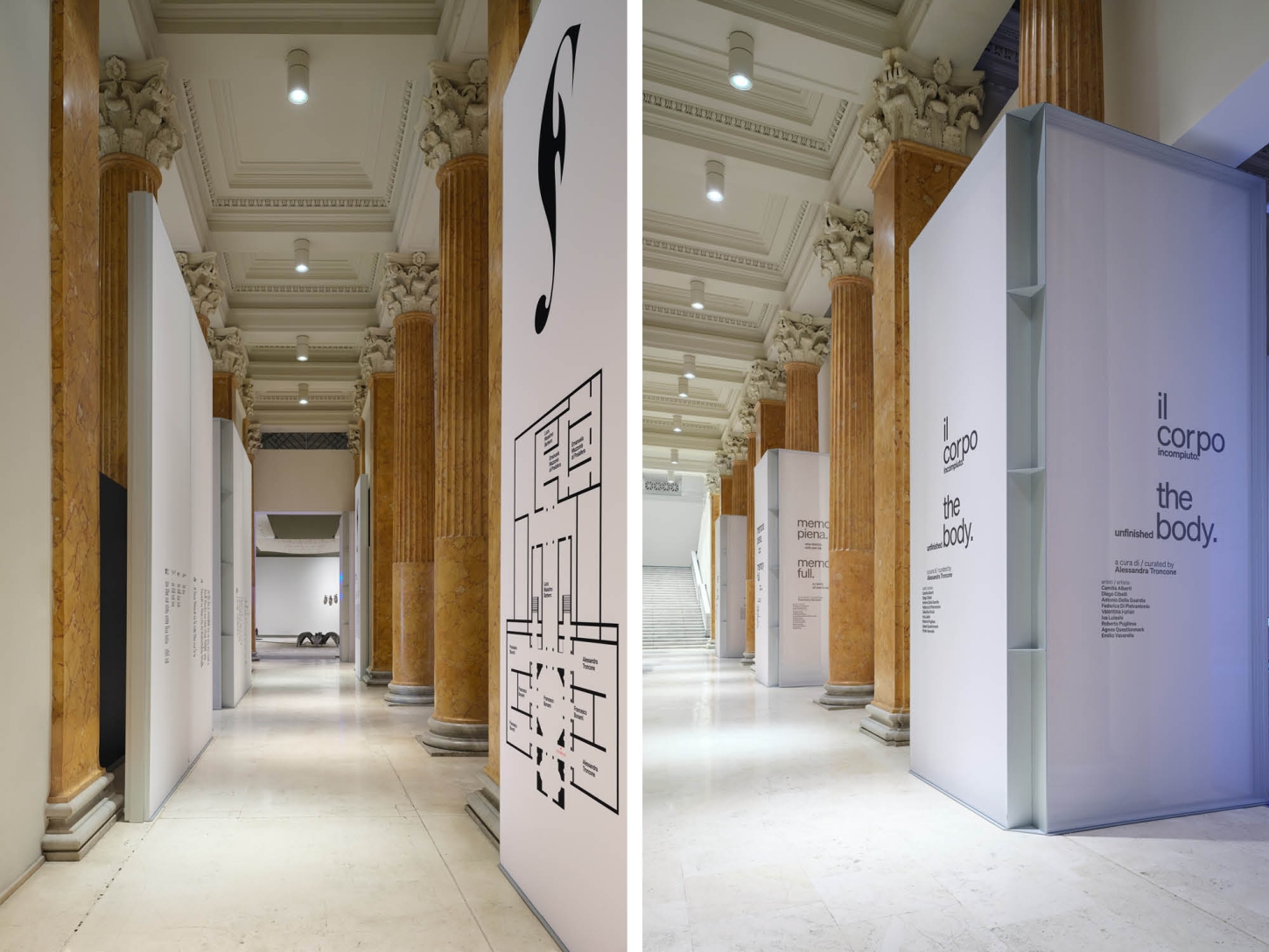
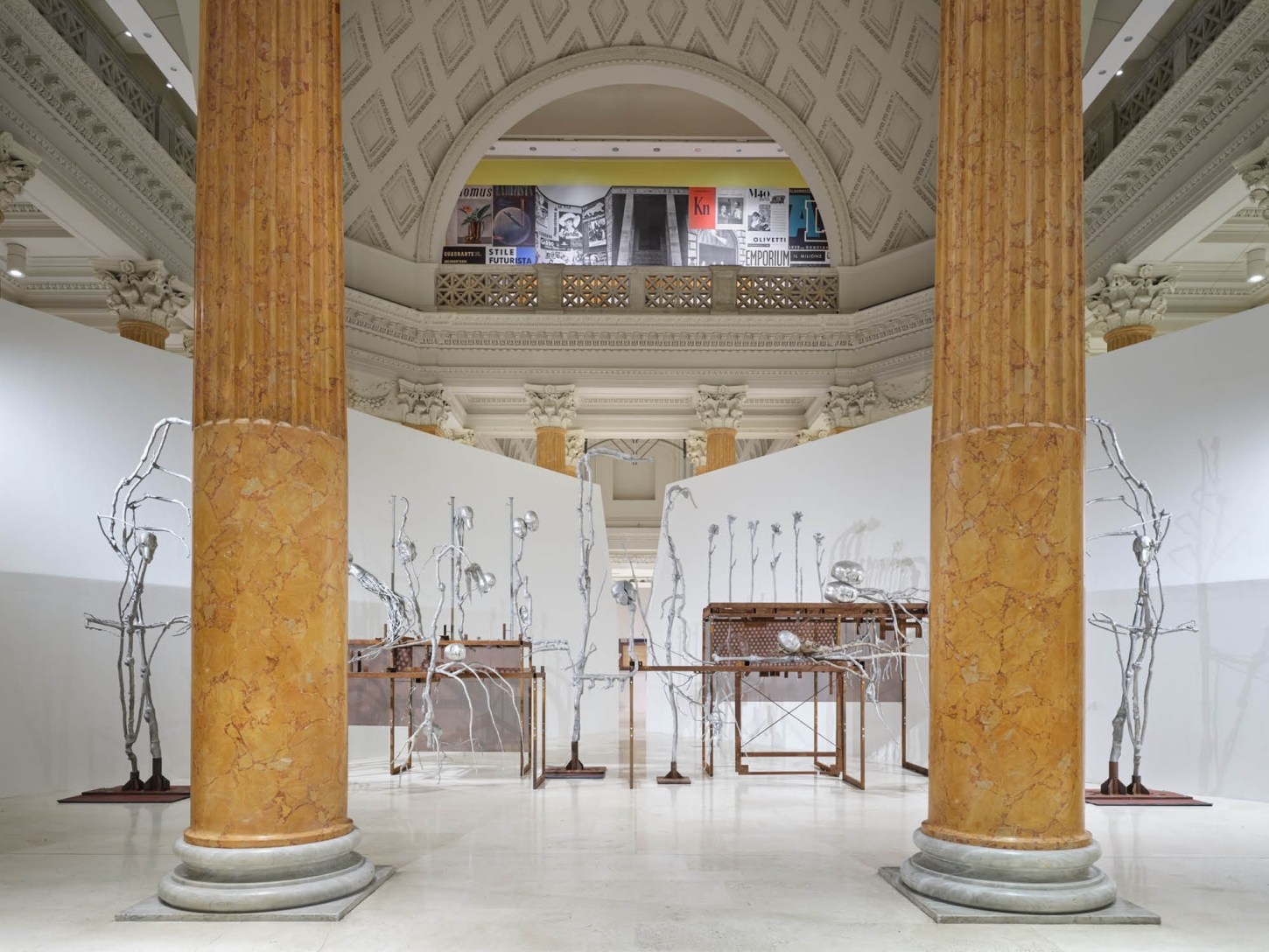
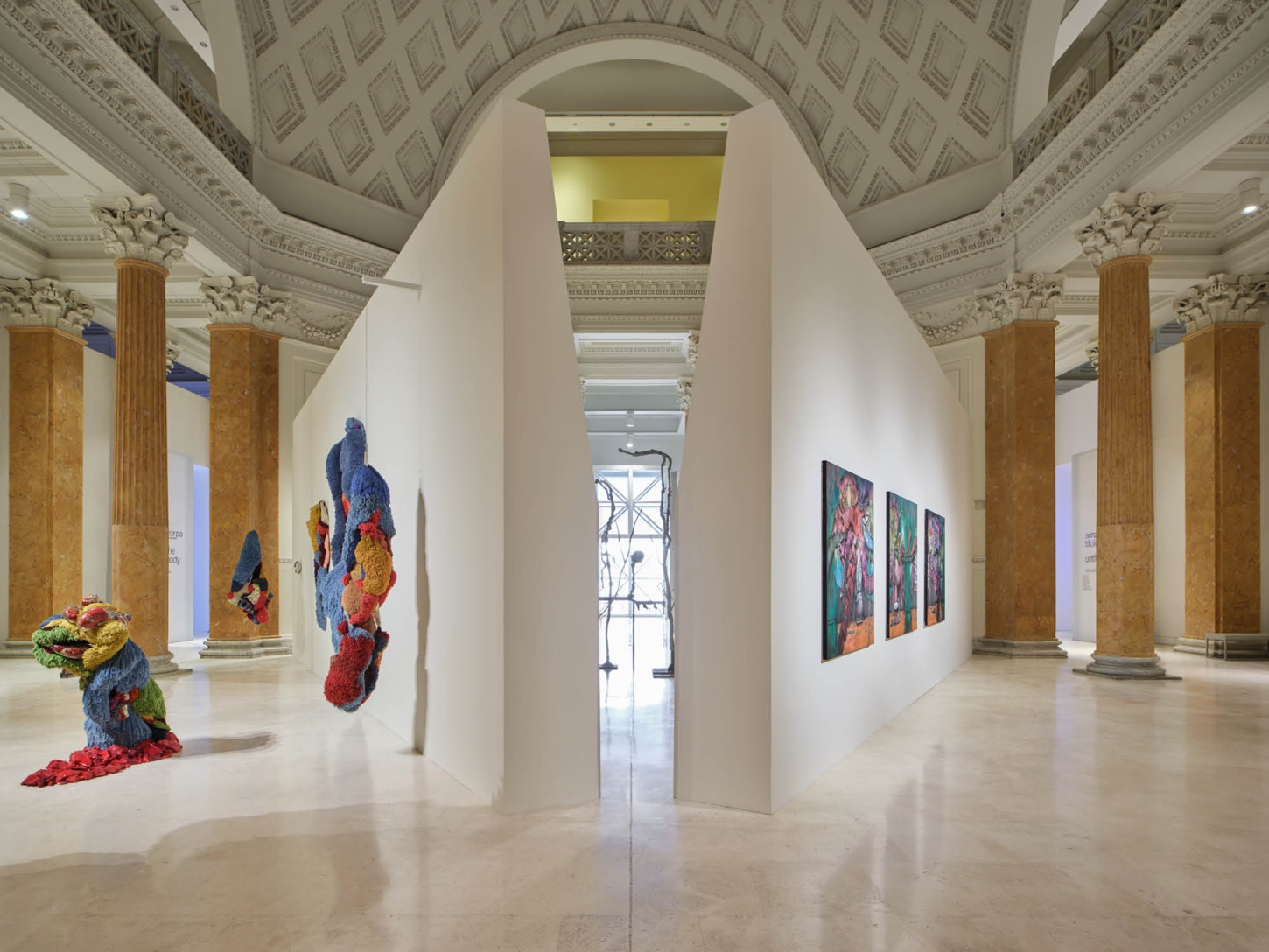
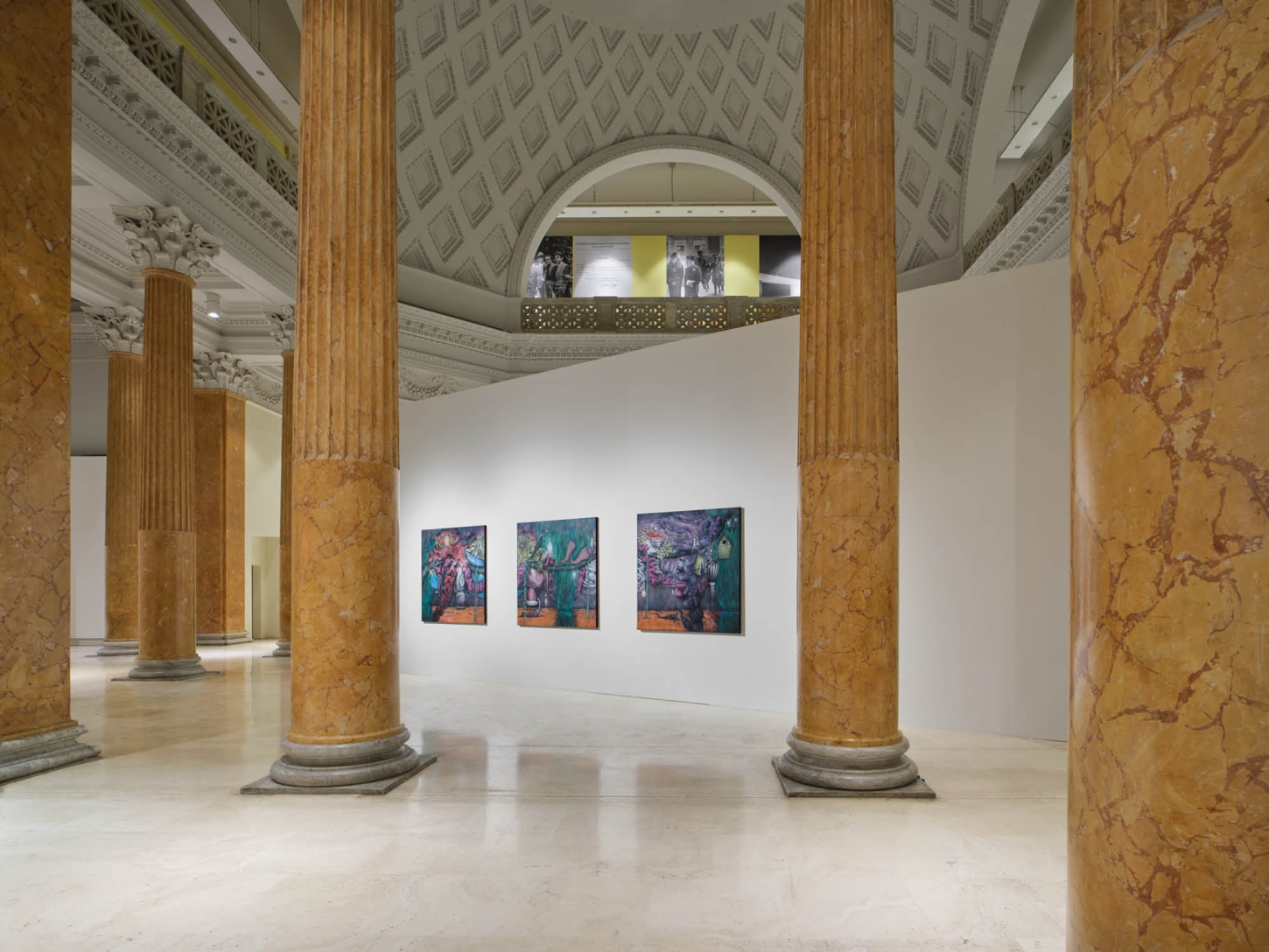
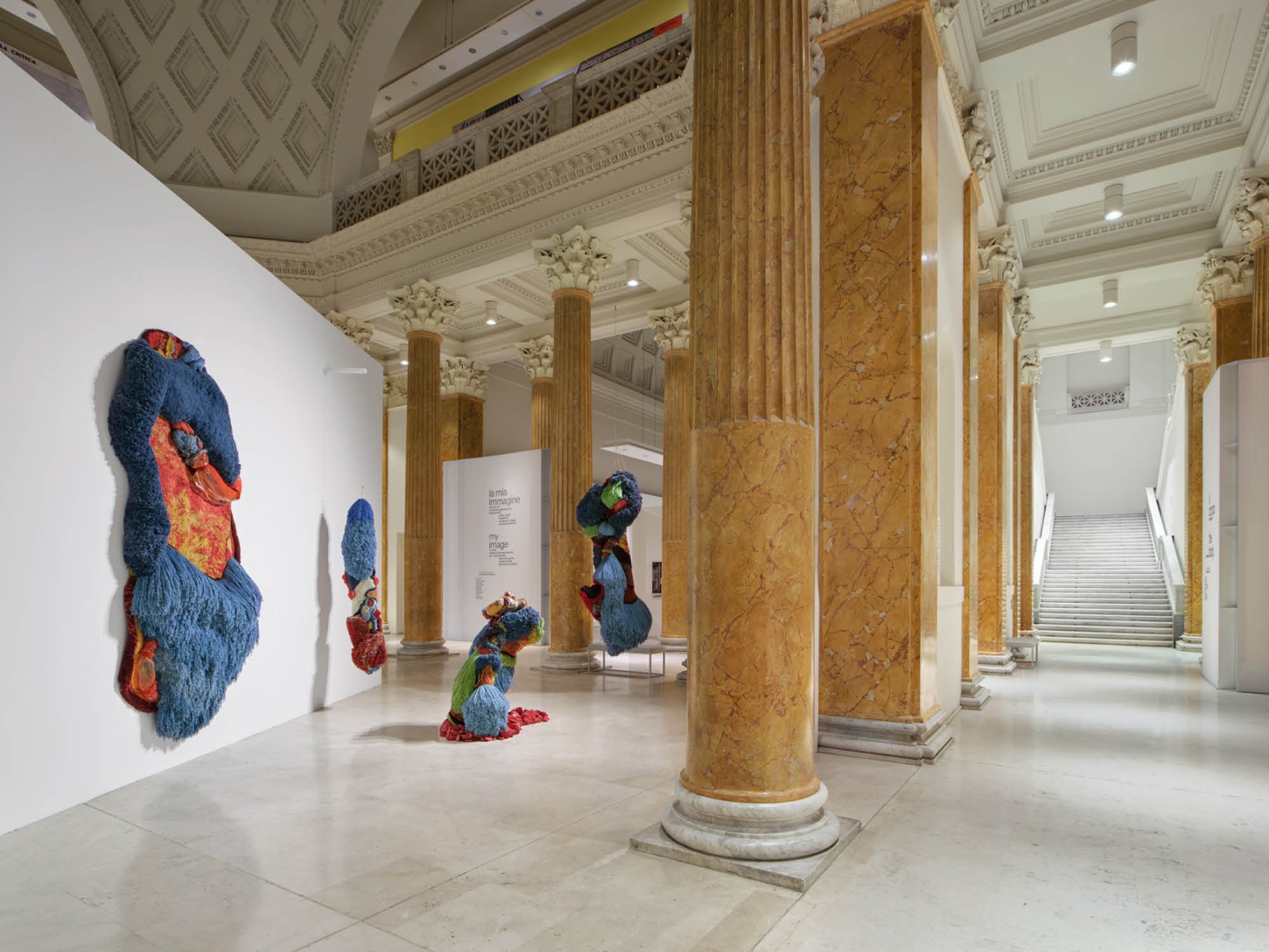
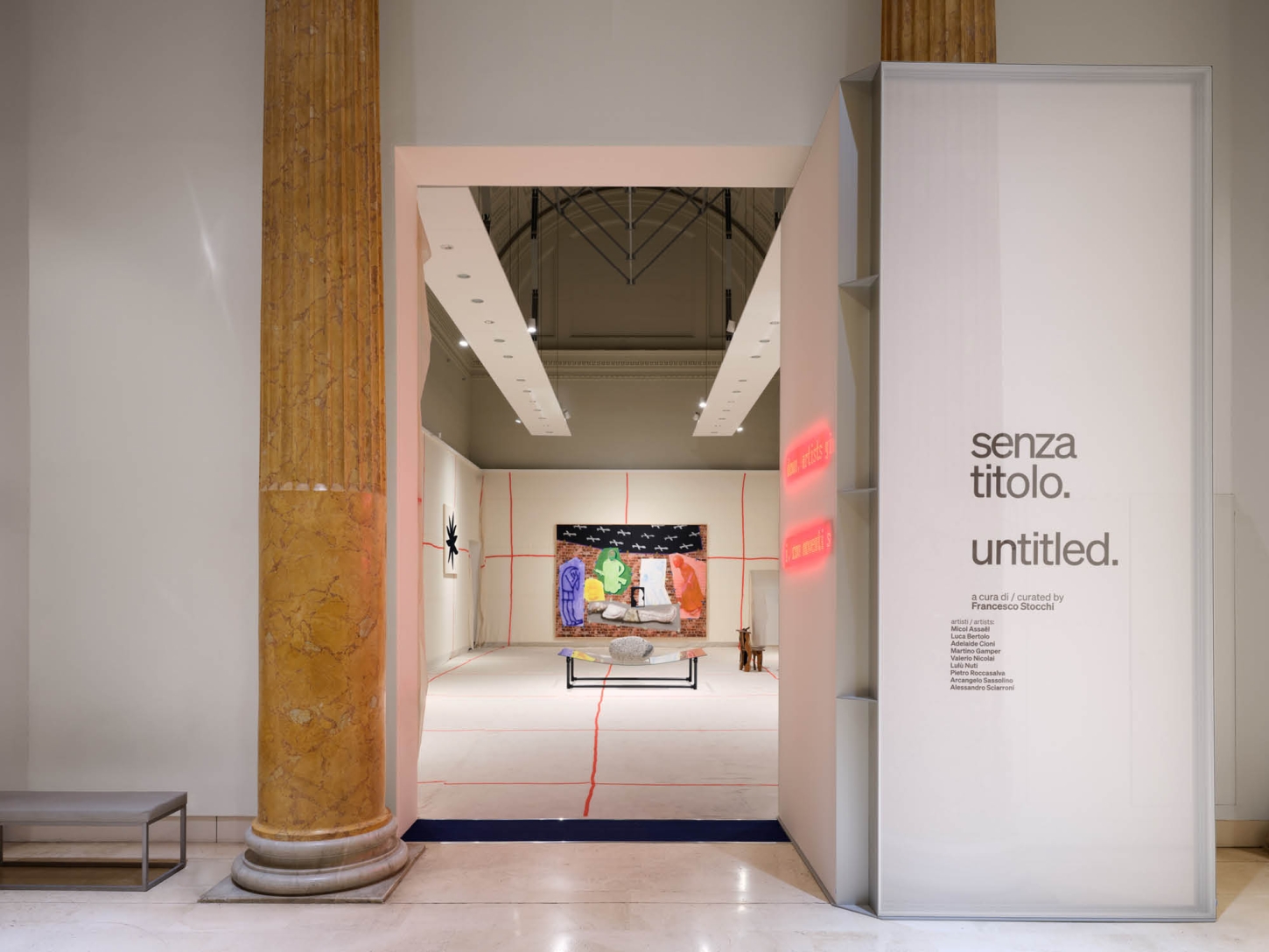
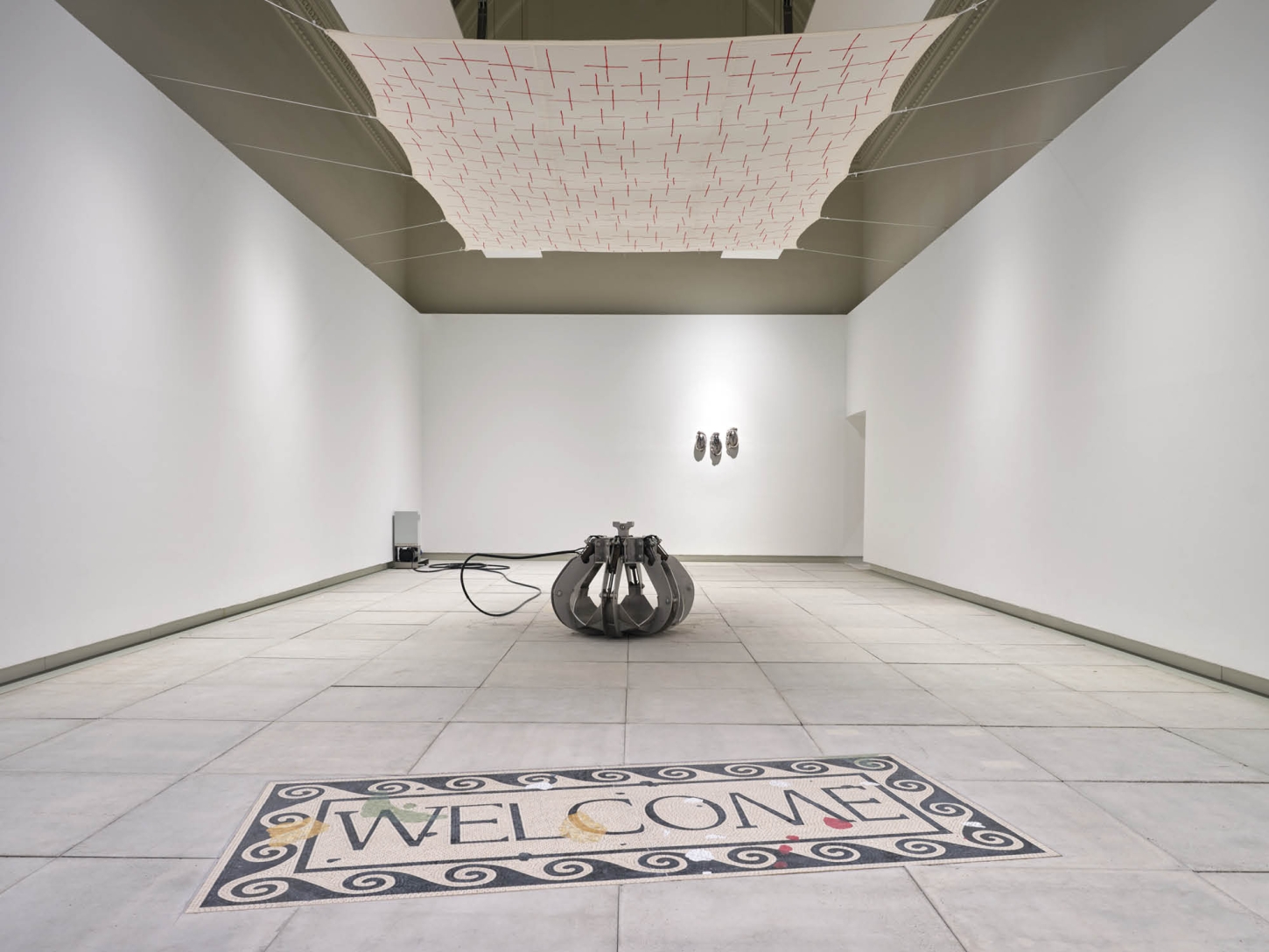
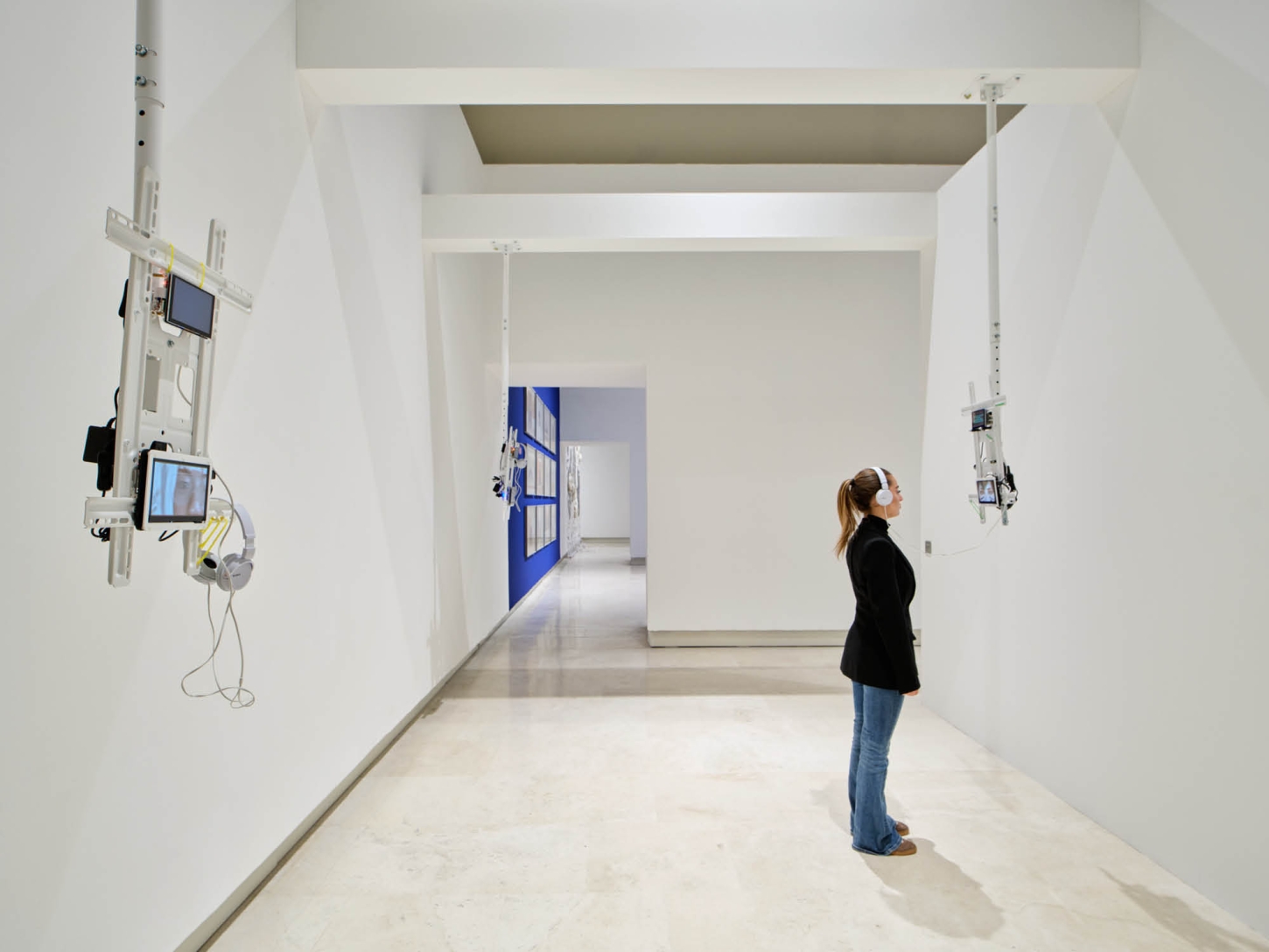
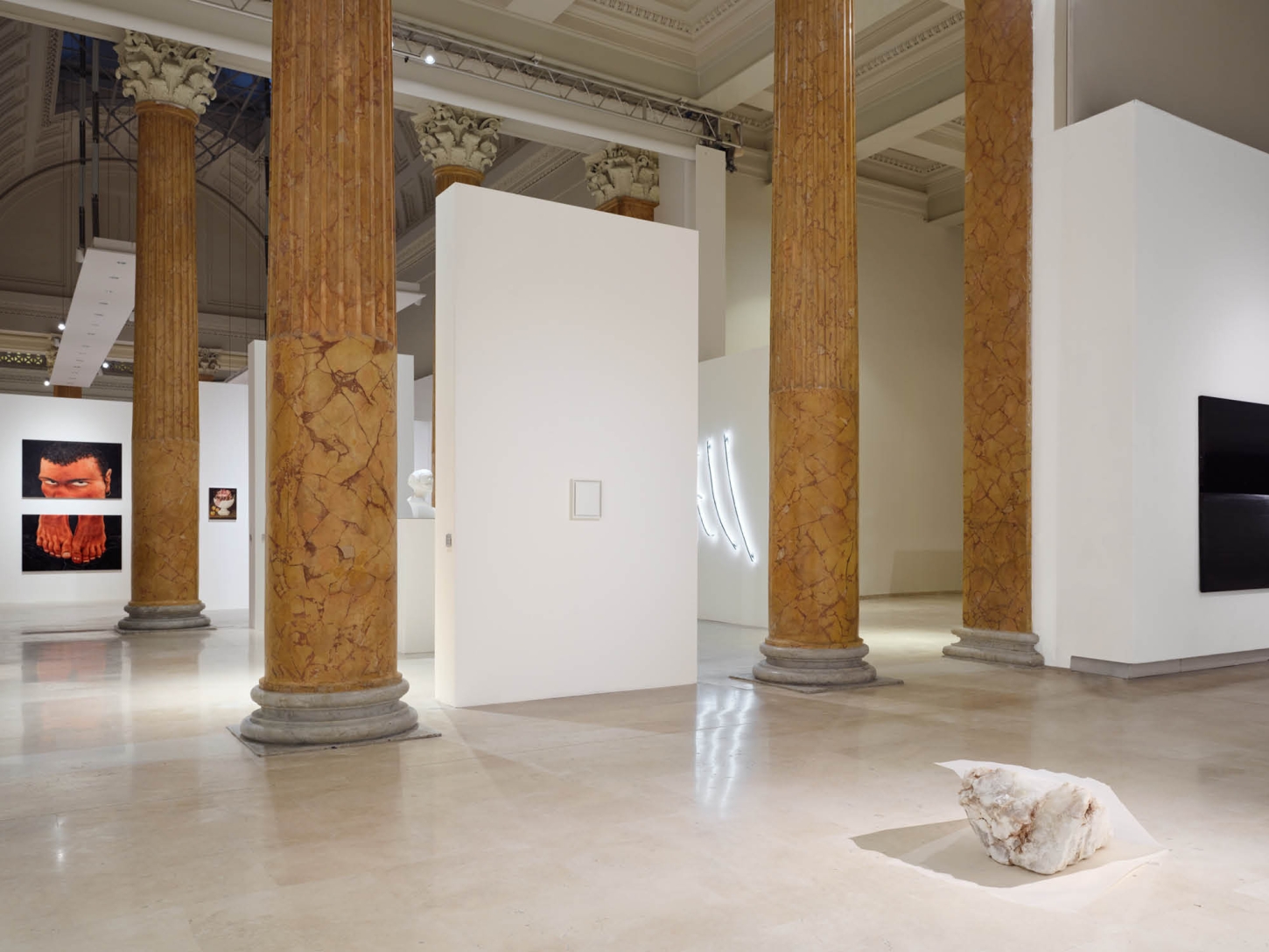
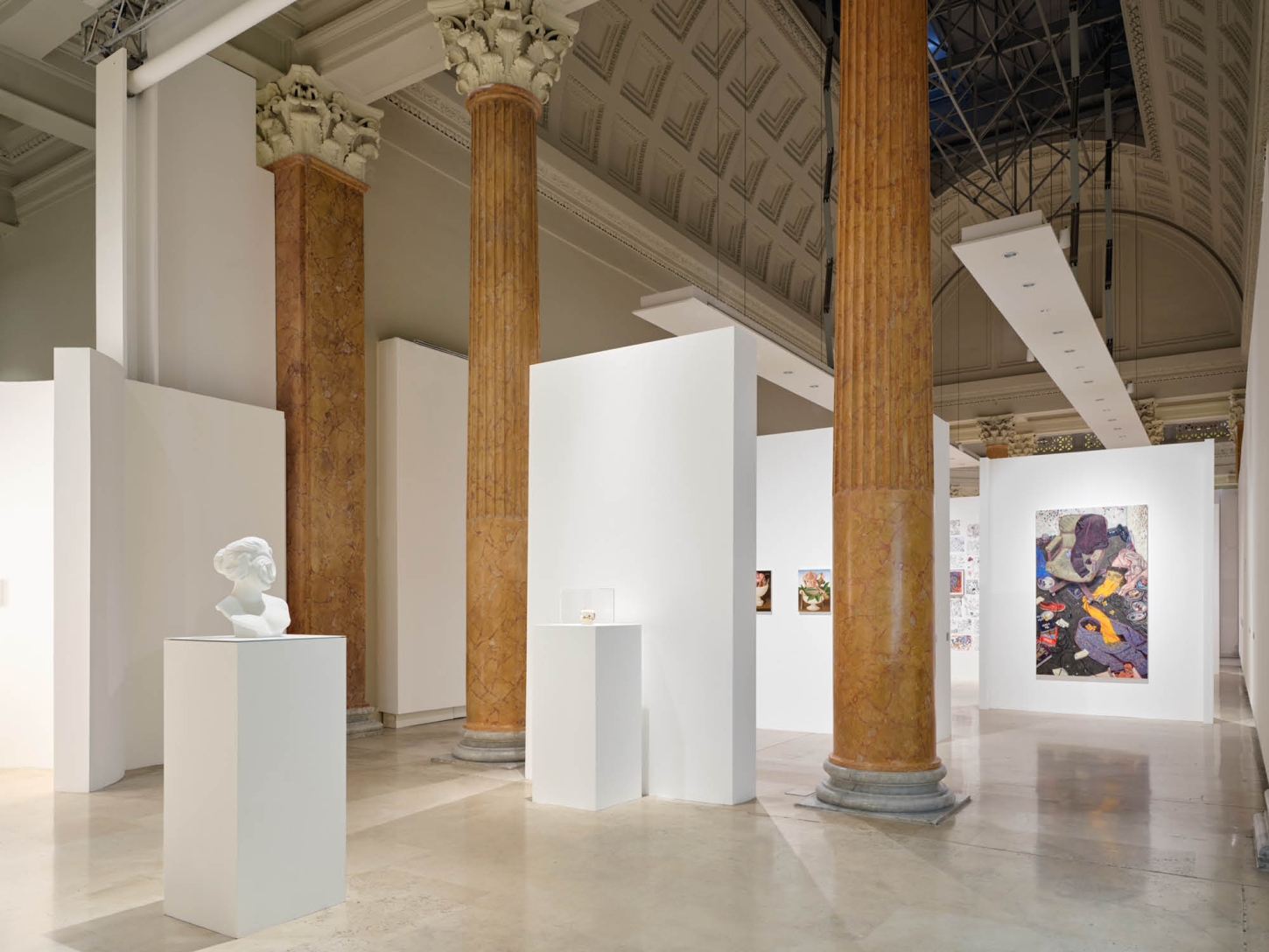
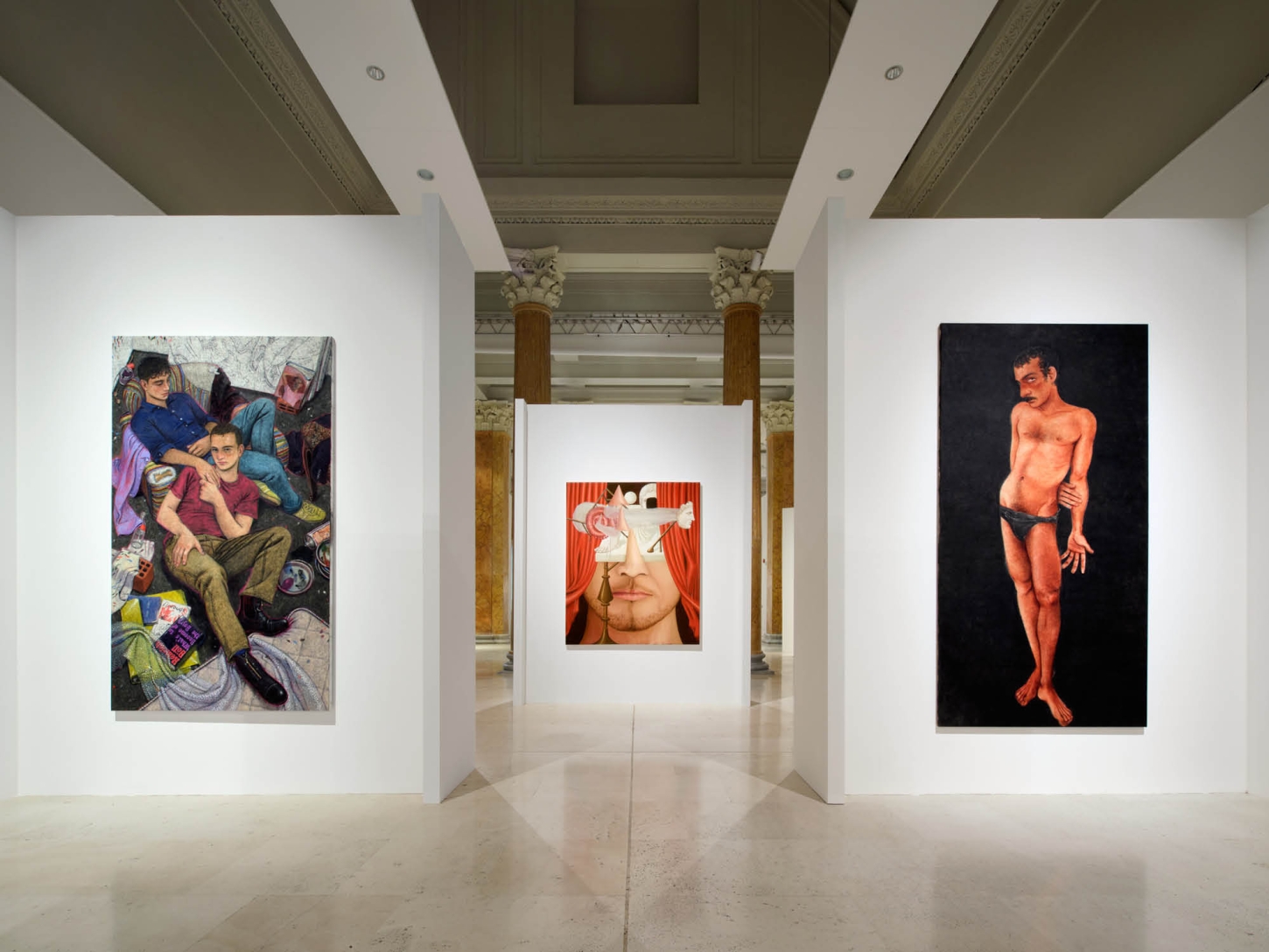
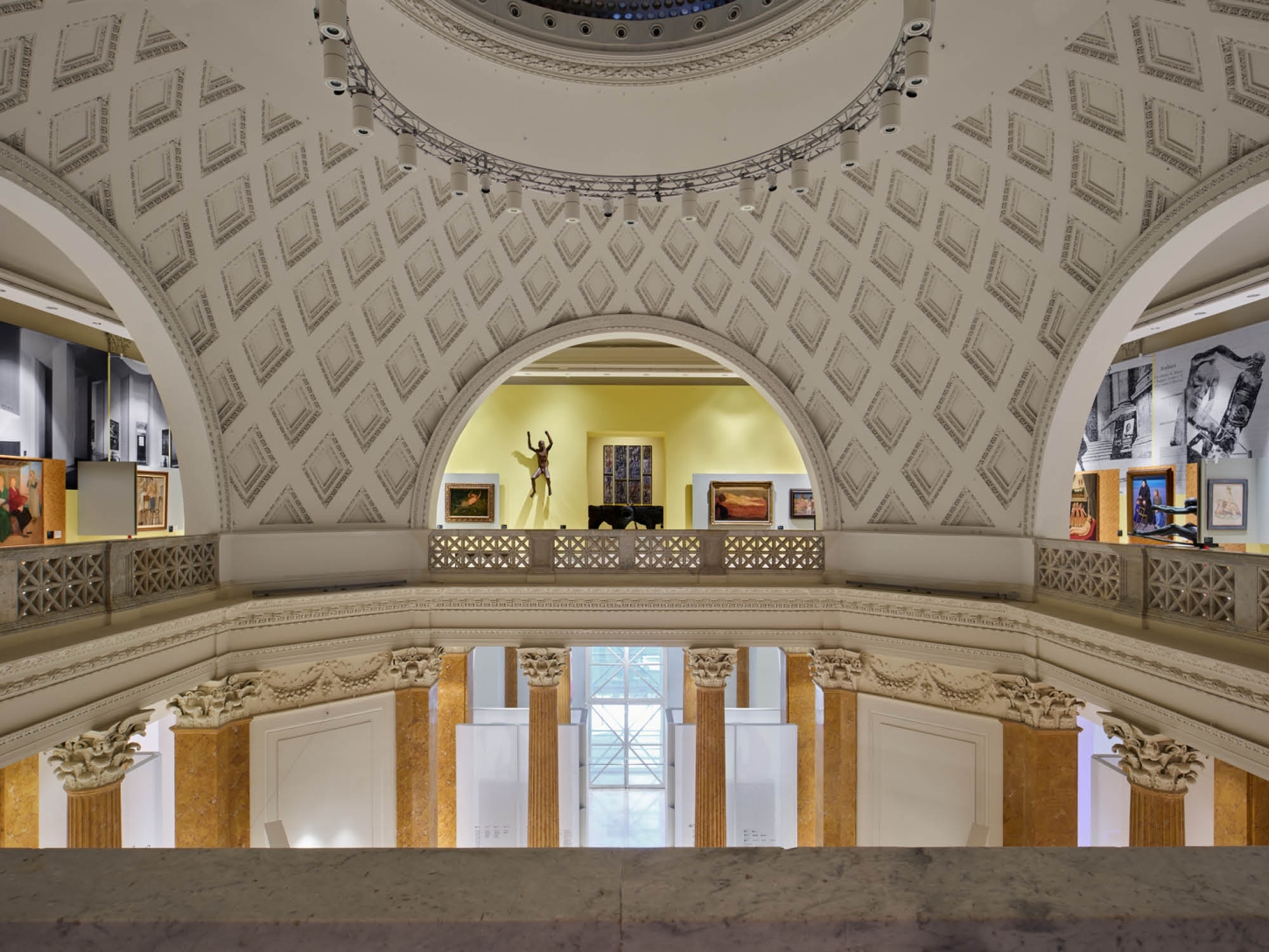
The exhibition features 54 artists and a total of 187 works, displayed across more than 2,000 square meters. BRH+ translates this plurality into an architectural narrative without hierarchies, transforming the monumental halls of the Palazzo Esposizioni into an open, unfolding landscape. The exhibition design was conceived as a dynamic continuum that engages directly with the neoclassical monumentality and the grand scale of Pio Piacentini’s original architecture for the Palazzo Esposizioni. It introduces spatial solutions that soften the rigidity of the building’s layout, establish cross-relations between rooms usually perceived as separate, and multiply the visitor’s points of view. The spaces are visually and physically interconnected, allowing for fluid circulation and multiple, shifting perspectives. For instance, the central rotunda of the Palazzo — housing the section curated by Francesco Bonami — is visually linked to adjoining galleries, following a design strategy that, here as elsewhere, seeks to break away from schematic spatial divisions, encourage fluid transitions, and offer alternative paths through the exhibition.
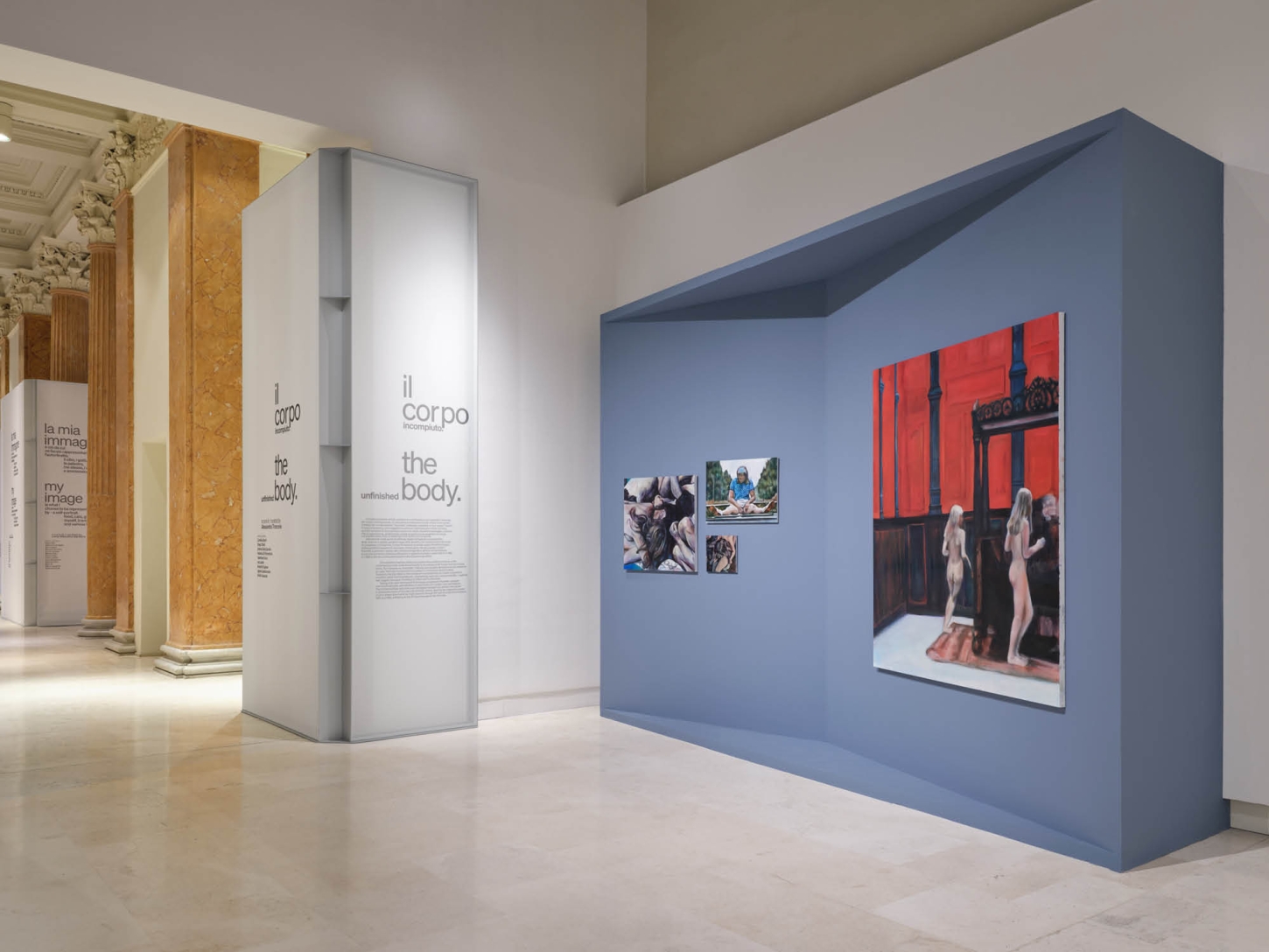
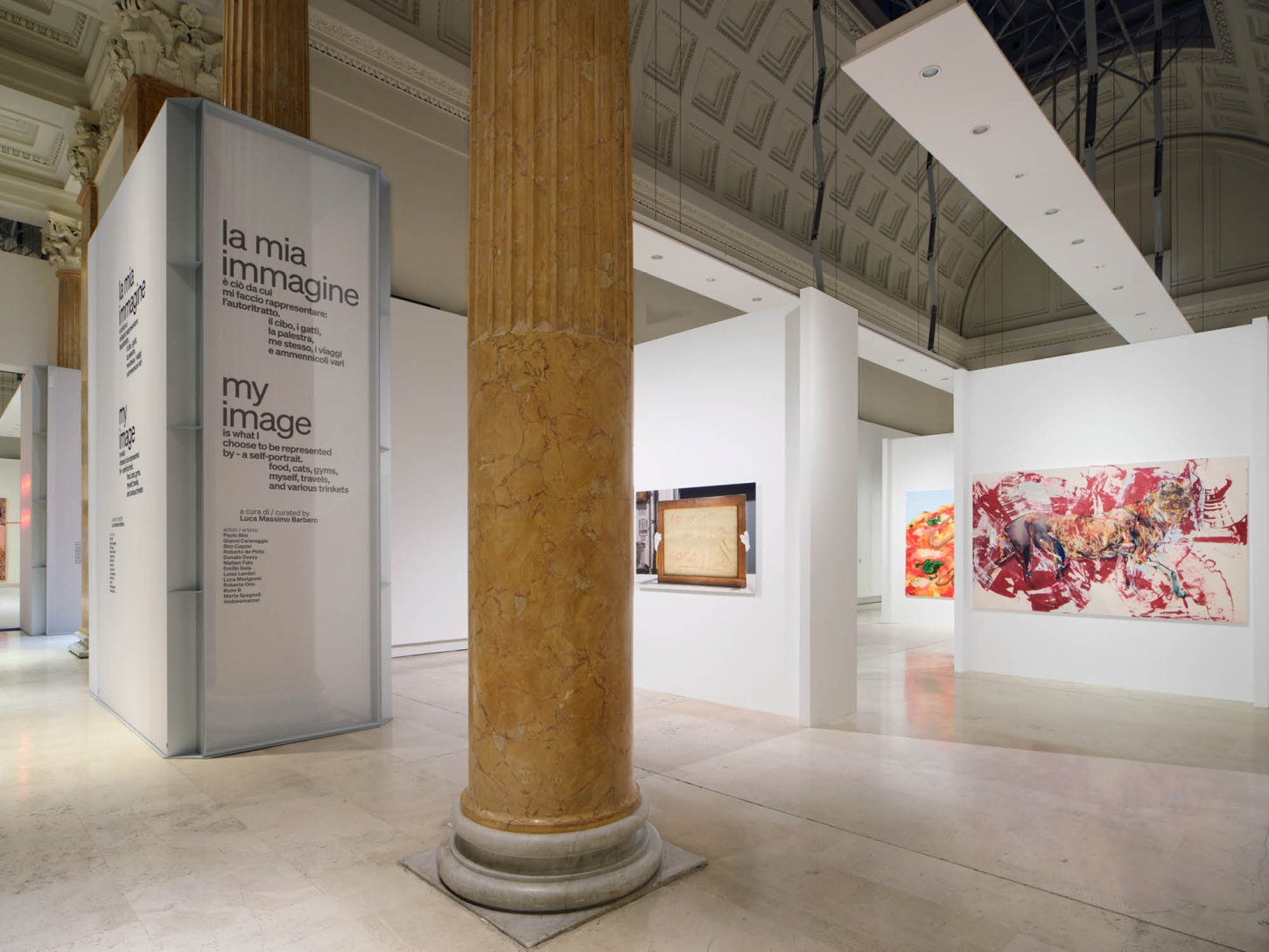
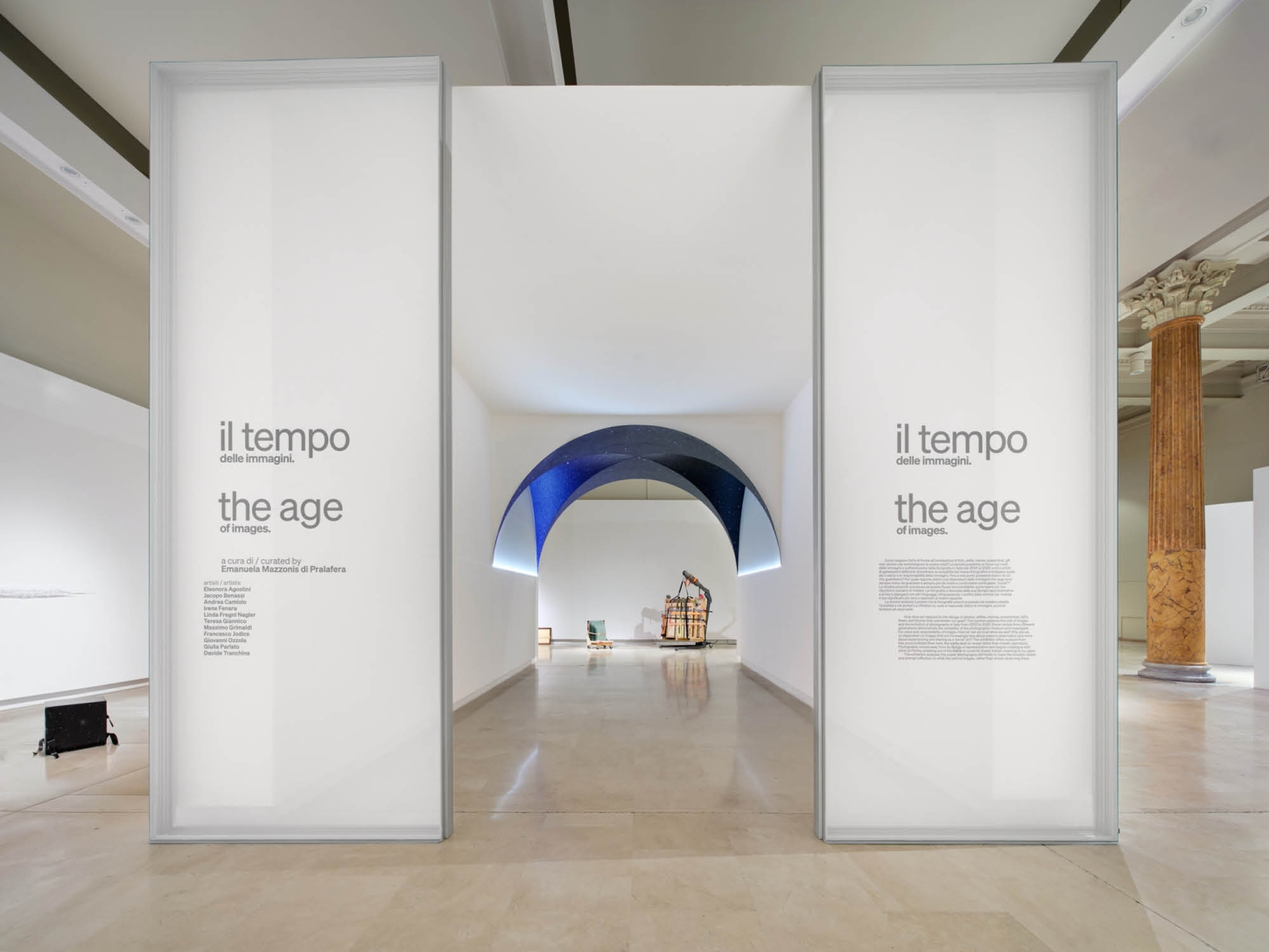
The theme of “seeing and seeing through” is underscored by a series of large-scale thresholds — aluminum-and-fabric structures that signal the transitions between curatorial sections. These solid yet ethereal presences guide the visitor’s journey and create a rhythmic sequence for the narrative of “Fantastica”. Depending on the viewer’s position, these membrane-like partitions appear either transparent or opaque, embodying the idea of a simultaneous duality: to unite while dividing, to connect in the very act of separation. They metaphorically express how each individual curatorial approach contributes to a larger, shared reflection on Italian art in the first quarter of the new century — the overarching theme of the exhibition. Overall, the BRH+ design proposes an essential yet responsive display, one that relates sensitively to the multitude of artworks on view while embracing a deliberate paradox: to reveal its presence while remaining almost invisible. This subtle curatorial ambition defines the exhibition spaces through a play of appearance and disappearance — an architectural rhythm that mirrors the contemporary condition itself.
“I giovani e i maestri. La Quadriennale del 1935”
A tribute to the most beautiful exhibition of the 1930s
Ninety years on, the tribute to the Second Quadriennale d’arte of 1935, conceived by Luca Beatrice and curated by Walter Guadagnini, offers visitors a glimpse into one of the foundational moments of twentieth-century Italian art. The colossal 1935 exhibition, which originally presented an overview of Italian art with approximately 1,800 works by over 700 artists, is now revisited through a carefully curated selection of masterpieces, highlighting their central role in shaping the artistic climate of the 1930s.
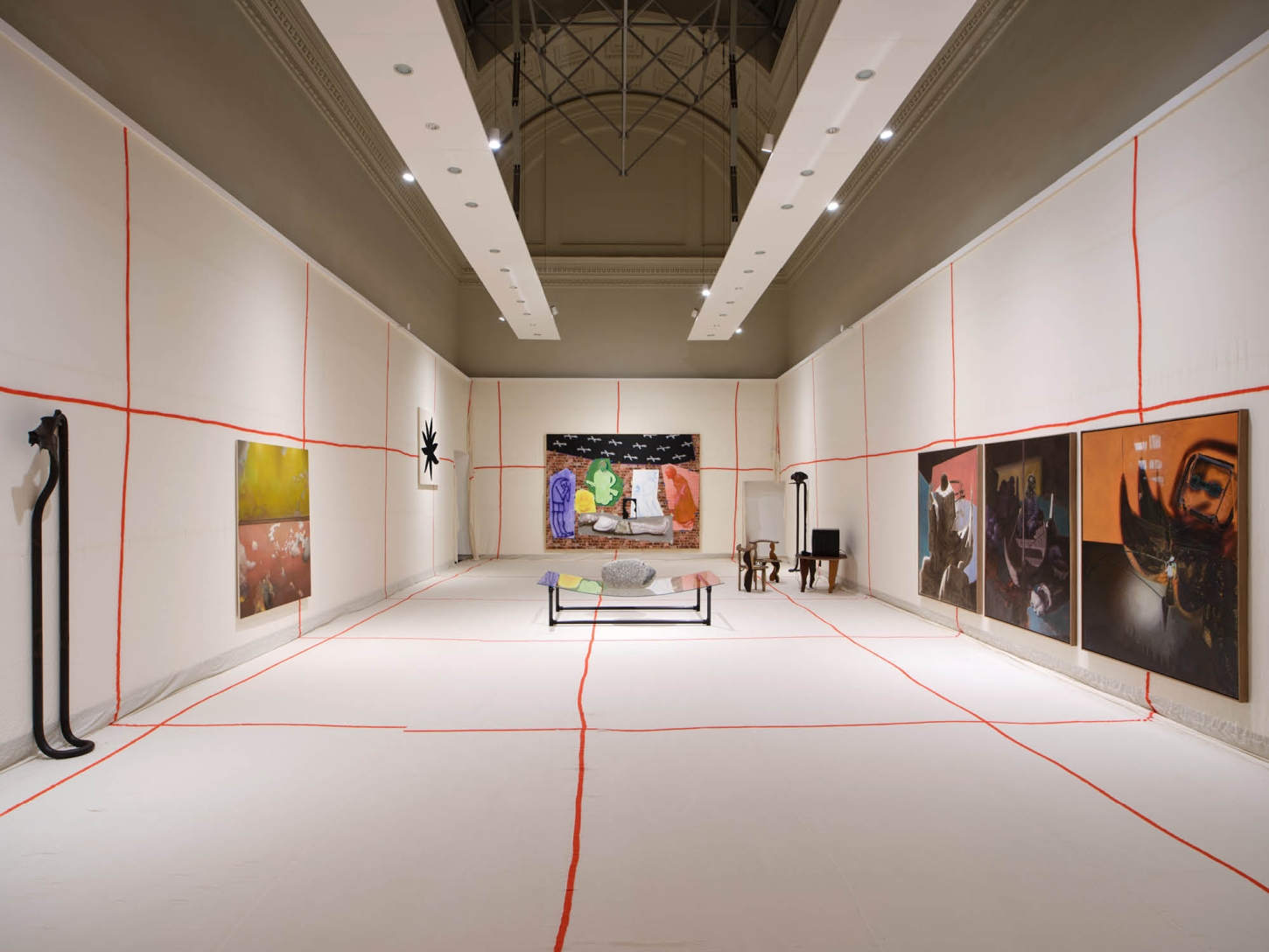
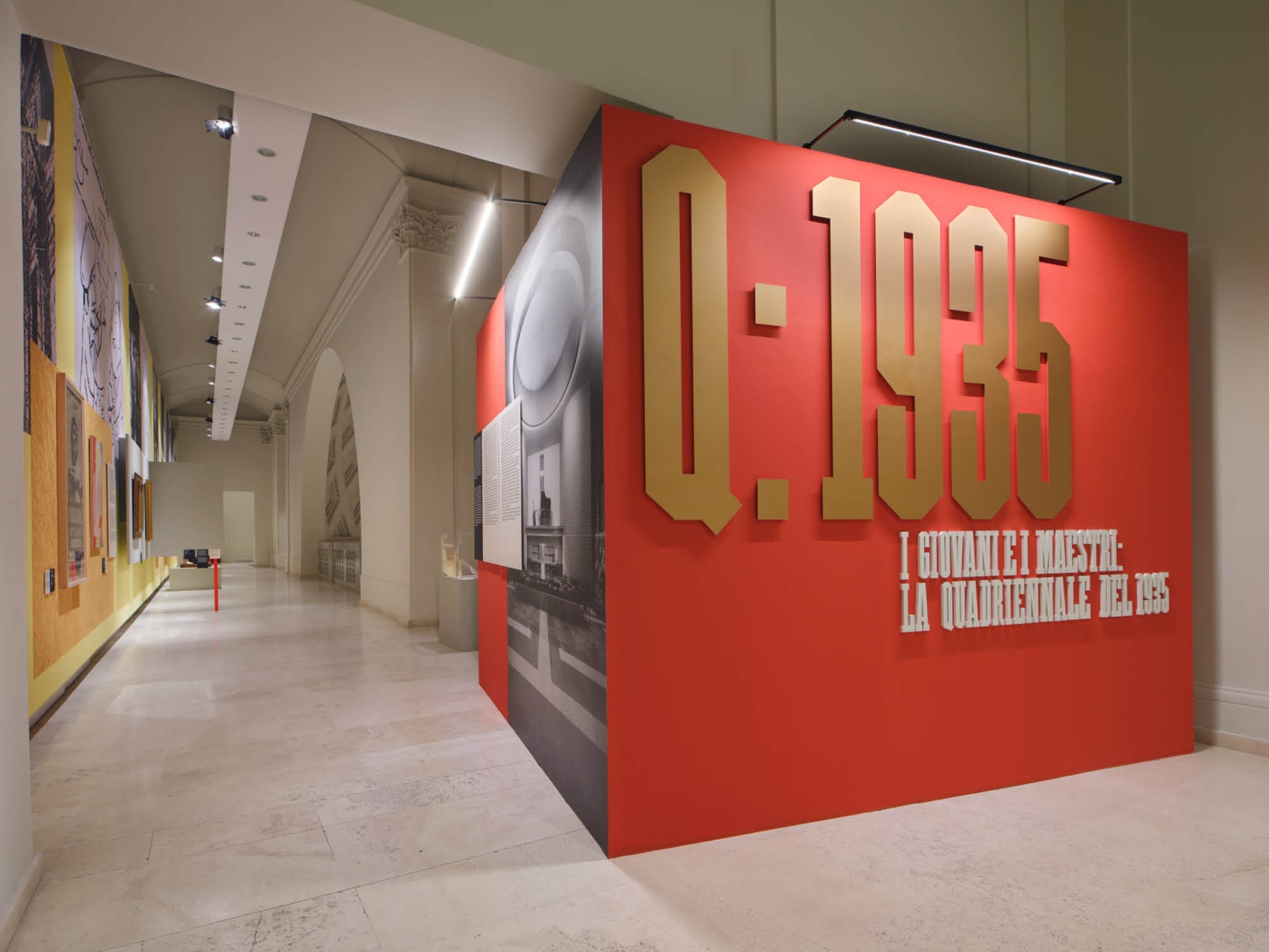
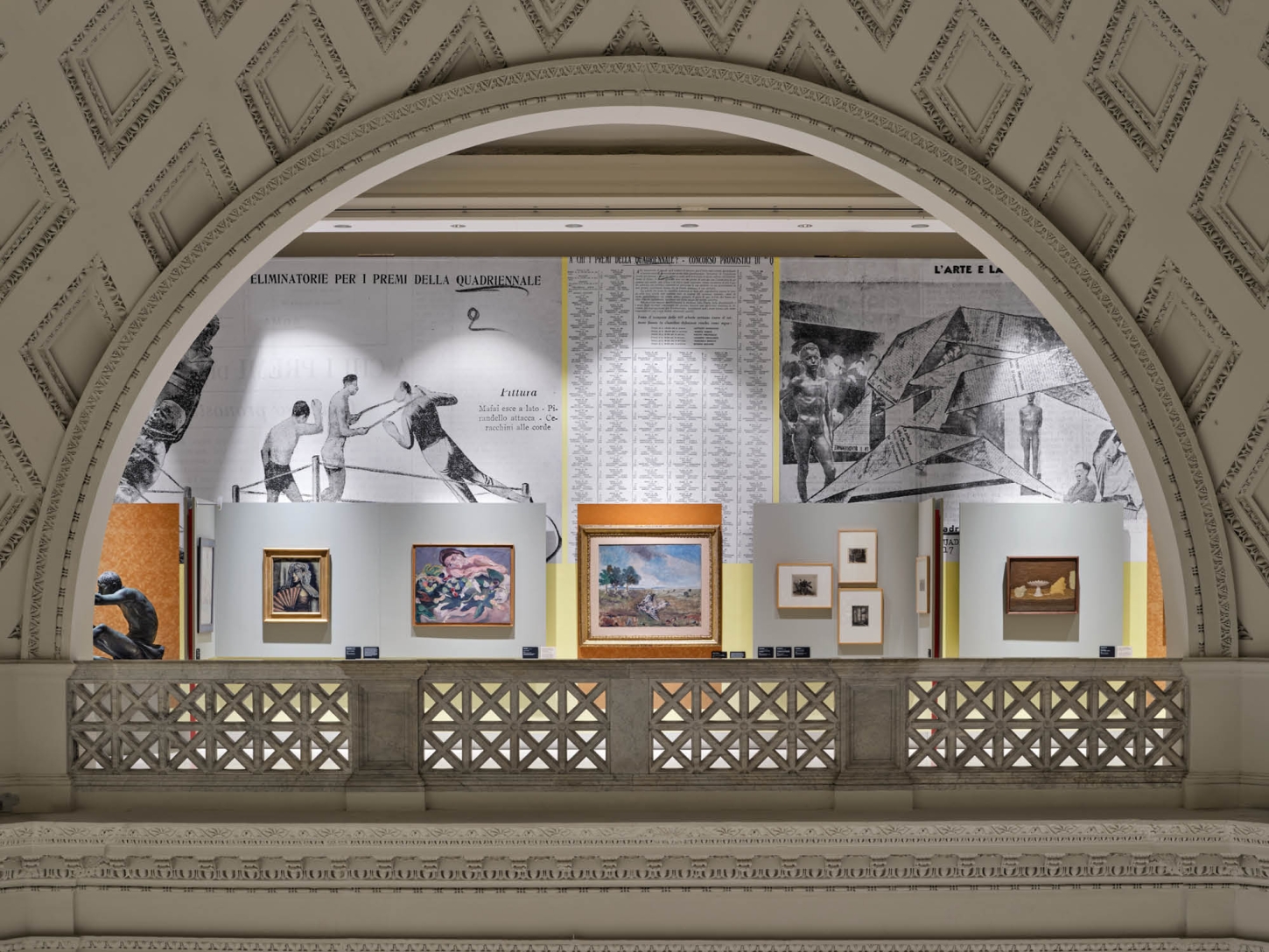
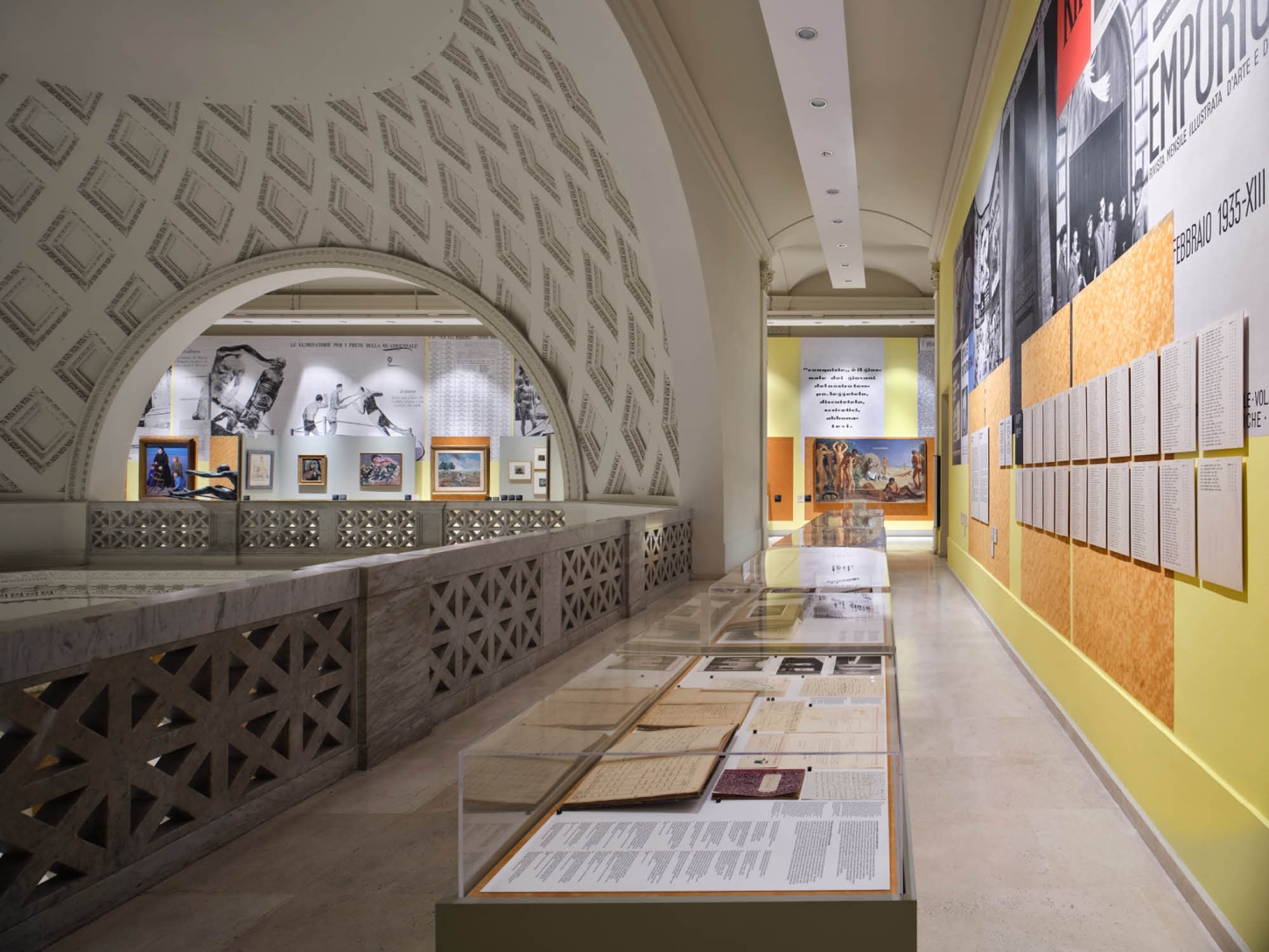
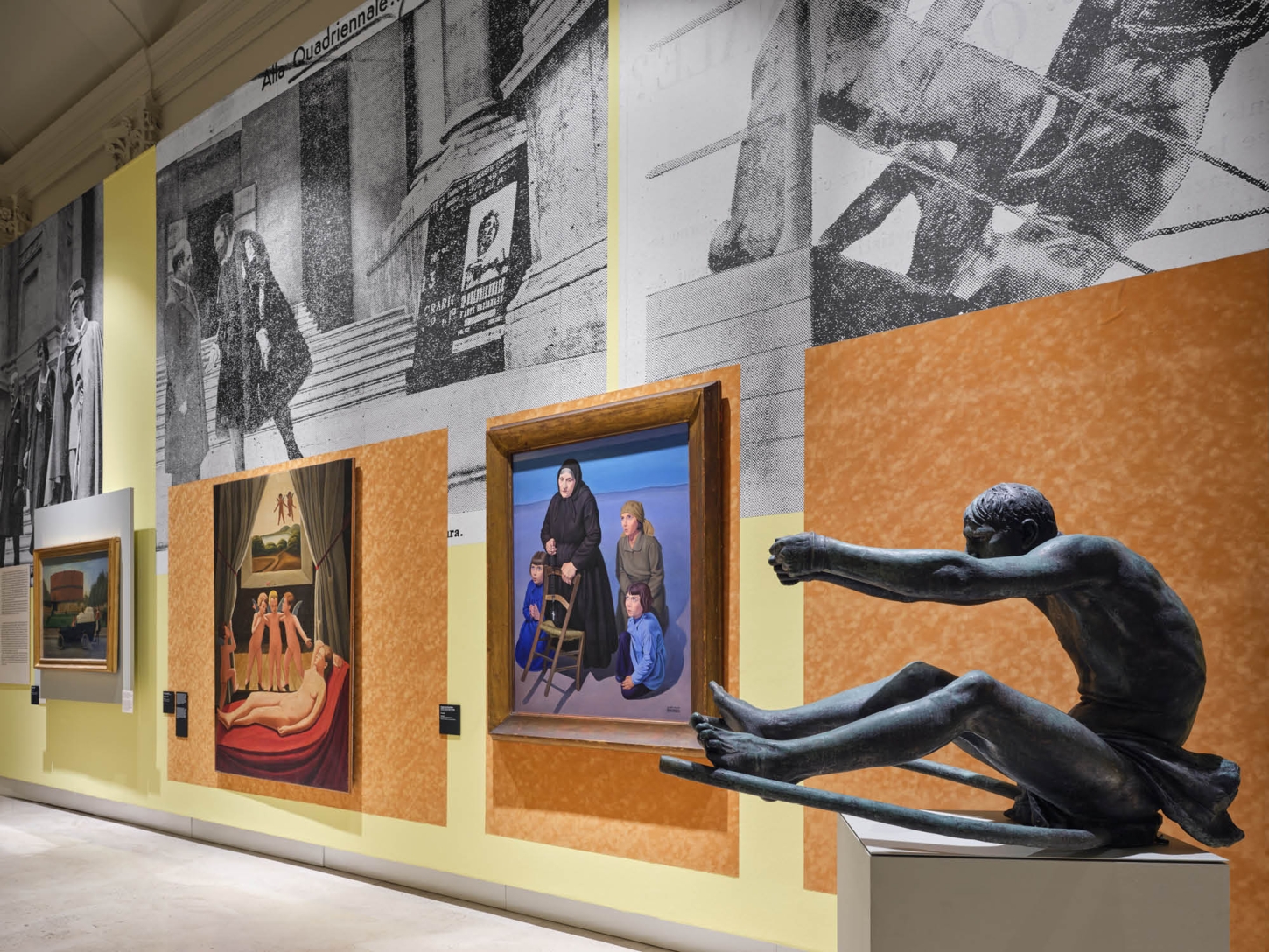
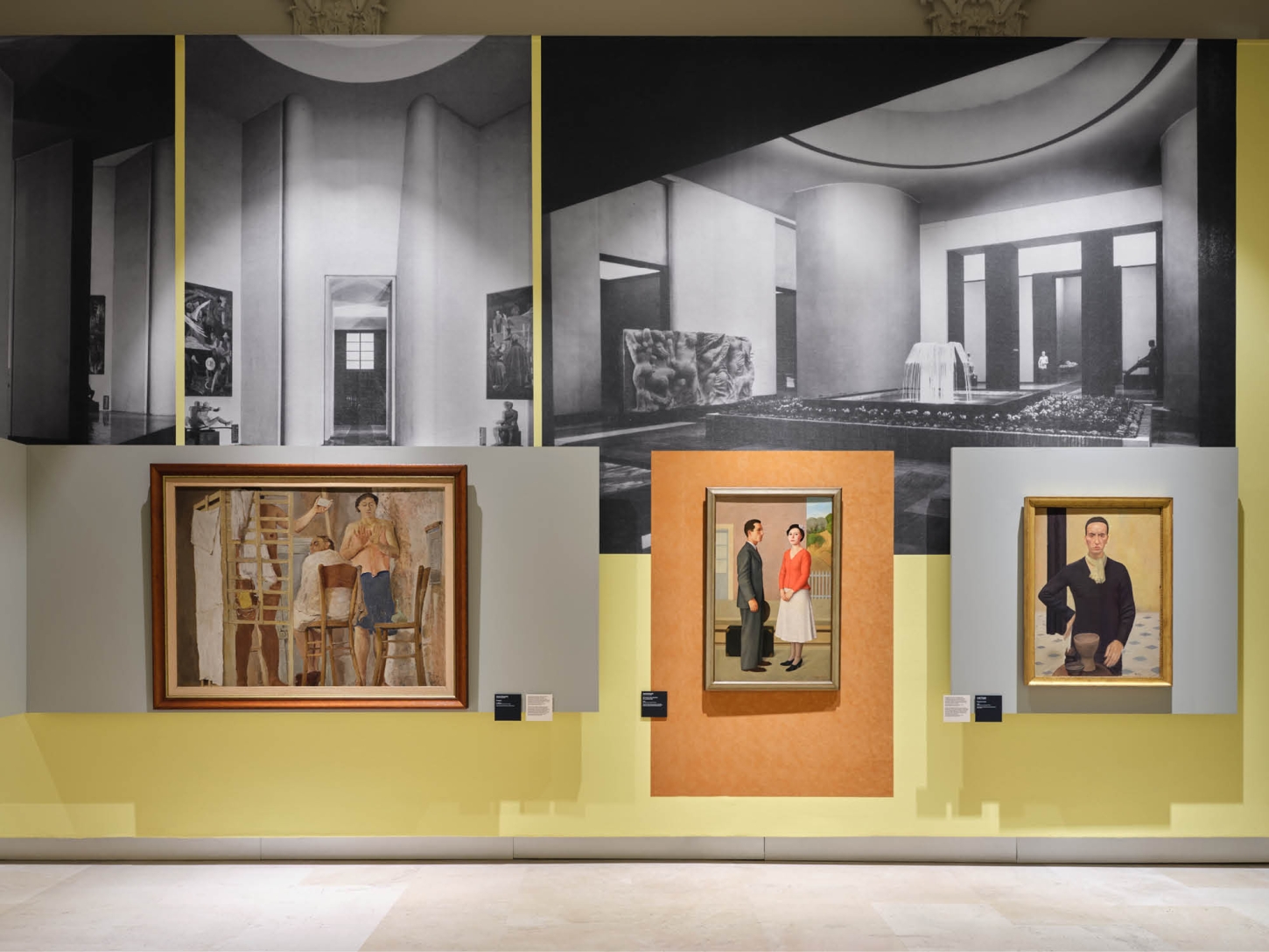
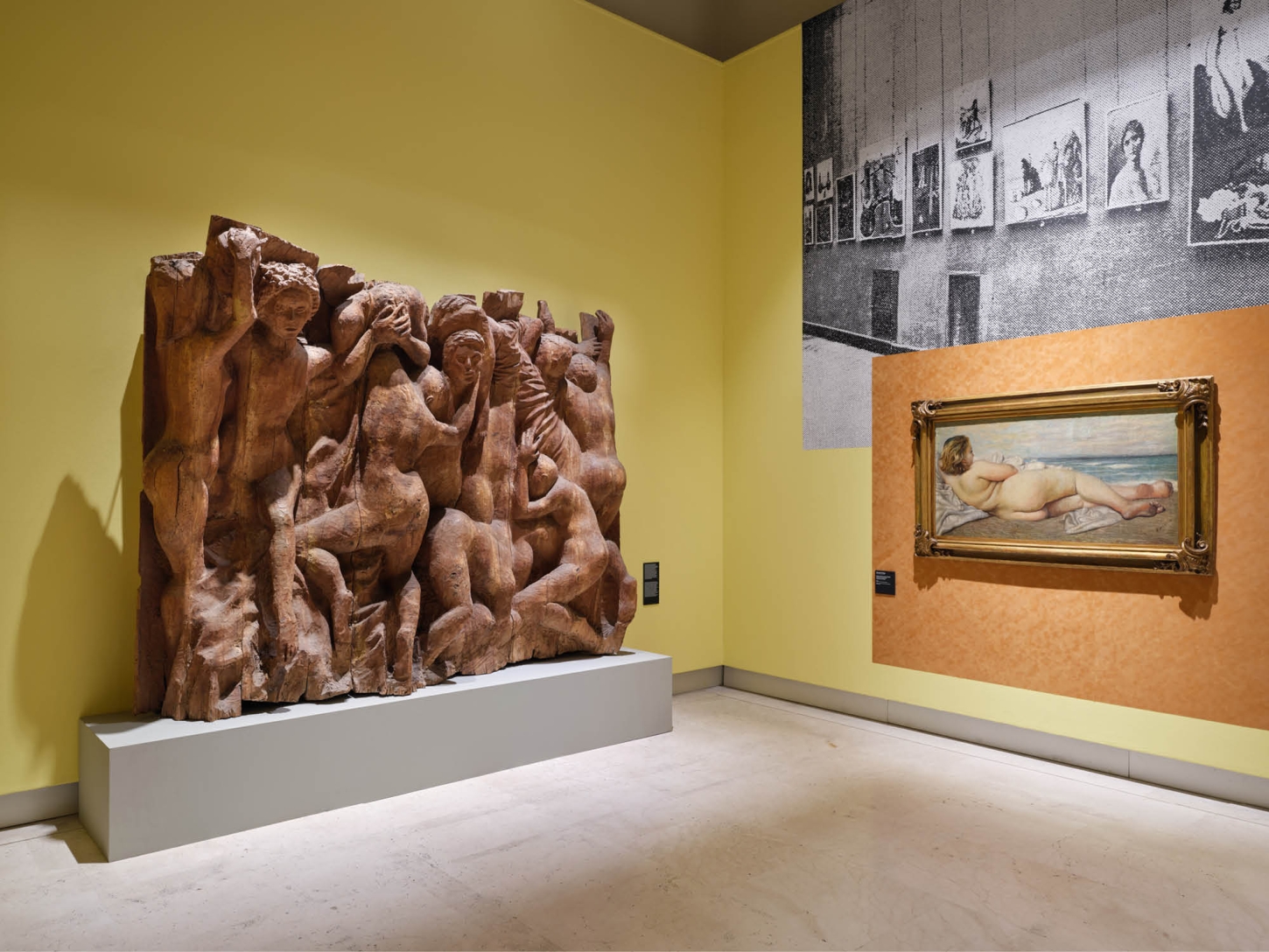
The historical homage, installed on the second floor of the Palazzo Esposizioni and designed by BRH+, adopts a deliberately distinct approach from that of “Fantastica”. Here, the intervention is outwardly expressive, richly layered and juxtaposed to create harmony through stratification. The works are displayed along a horizontal, linear, and progressive sequence, on wooden panels and textile-like surfaces, within a color scheme inspired by — and interpreted from — the original 1935 exhibition design. Paintings and sculptures by extraordinary artists such as Martini, Marini, De Chirico, Scipione, Sironi, and Morandi, together with numerous archival documents selected by the Archivio Biblioteca (Library Archive) of Quadriennale, unfold along a dynamic path punctuated by a large-format photographic frieze, amplifying the works’ iconographic dimension and producing an immediate, powerful visual impact.
The architectural design by BRH+ and the graphic identity by Studio Sonnoli converge in this collective exhibition, achieving full integration. The collaboration aims to create a clear, contemporary visual language that interprets the richness and inspiration of this historic artistic moment.
Courtesy: Fondazione La Quadriennale di Roma
Pictures: Agostino Osio – Alto Piano
BRH+ designs the layout for the 18th edition of the Quadriennale d’arte, creating the exhibition architecture for the shows “Fantastica” and “I giovani e i maestri. La Quadriennale del 1935” at the Palazzo Esposizioni in Rome.
The Quadriennale d’arte, a historic and prestigious exhibition of contemporary Italian art, presents the program of its 18th edition at the Palazzo Esposizioni in Rome with an exhibition design by BRH+. The exhibition unfolds across two major shows: “Fantastica,” devoted to the Italian art scene after the 2000s, and “I giovani e i maestri. La Quadriennale del 1935,” a tribute to the edition that marked a turning point in Italian art during the 1930s. BRH+ designs a dual intervention that engages with the monumental setting of the Palazzo Esposizioni, interpreting the visions of the curators and artists through narrative spaces that are both precise and balanced, yet open and fluid.
“Fantastica”
A Plural Map of Contemporary Art
The main exhibition takes its title from an idea by Luca Beatrice, President of the Quadriennale, who passed away prematurely in January 2025. His vision deeply inspired this edition, having selected its curators and imagined it as a major opportunity to showcase the rich plurality of languages that define contemporary artistic expression. Presented on the first floor of the Palazzo Esposizioni, “Fantastica” explores the landscape of Italian contemporary art since the 2000s through five distinct curatorial chapters, developed by Luca Massimo Barbero, Francesco Bonami, Emanuela Mazzonis di Pralafera, Francesco Stocchi, and Alessandra Troncone.
The exhibition features 54 artists and a total of 187 works, displayed across more than 2,000 square meters. BRH+ translates this plurality into an architectural narrative without hierarchies, transforming the monumental halls of the Palazzo Esposizioni into an open, unfolding landscape. The exhibition design was conceived as a dynamic continuum that engages directly with the neoclassical monumentality and the grand scale of Pio Piacentini’s original architecture for the Palazzo Esposizioni. It introduces spatial solutions that soften the rigidity of the building’s layout, establish cross-relations between rooms usually perceived as separate, and multiply the visitor’s points of view. The spaces are visually and physically interconnected, allowing for fluid circulation and multiple, shifting perspectives. For instance, the central rotunda of the Palazzo — housing the section curated by Francesco Bonami — is visually linked to adjoining galleries, following a design strategy that, here as elsewhere, seeks to break away from schematic spatial divisions, encourage fluid transitions, and offer alternative paths through the exhibition.
The theme of “seeing and seeing through” is underscored by a series of large-scale thresholds — aluminum-and-fabric structures that signal the transitions between curatorial sections. These solid yet ethereal presences guide the visitor’s journey and create a rhythmic sequence for the narrative of “Fantastica”. Depending on the viewer’s position, these membrane-like partitions appear either transparent or opaque, embodying the idea of a simultaneous duality: to unite while dividing, to connect in the very act of separation. They metaphorically express how each individual curatorial approach contributes to a larger, shared reflection on Italian art in the first quarter of the new century — the overarching theme of the exhibition. Overall, the BRH+ design proposes an essential yet responsive display, one that relates sensitively to the multitude of artworks on view while embracing a deliberate paradox: to reveal its presence while remaining almost invisible. This subtle curatorial ambition defines the exhibition spaces through a play of appearance and disappearance — an architectural rhythm that mirrors the contemporary condition itself.
“I giovani e i maestri. La Quadriennale del 1935”
A tribute to the most beautiful exhibition of the 1930s
Ninety years on, the tribute to the Second Quadriennale d’arte of 1935, conceived by Luca Beatrice and curated by Walter Guadagnini, offers visitors a glimpse into one of the foundational moments of twentieth-century Italian art. The colossal 1935 exhibition, which originally presented an overview of Italian art with approximately 1,800 works by over 700 artists, is now revisited through a carefully curated selection of masterpieces, highlighting their central role in shaping the artistic climate of the 1930s.
The historical homage, installed on the second floor of the Palazzo Esposizioni and designed by BRH+, adopts a deliberately distinct approach from that of “Fantastica”. Here, the intervention is outwardly expressive, richly layered and juxtaposed to create harmony through stratification. The works are displayed along a horizontal, linear, and progressive sequence, on wooden panels and textile-like surfaces, within a color scheme inspired by — and interpreted from — the original 1935 exhibition design. Paintings and sculptures by extraordinary artists such as Martini, Marini, De Chirico, Scipione, Sironi, and Morandi, together with numerous archival documents selected by the Archivio Biblioteca (Library Archive) of Quadriennale, unfold along a dynamic path punctuated by a large-format photographic frieze, amplifying the works’ iconographic dimension and producing an immediate, powerful visual impact.
The architectural design by BRH+ and the graphic identity by Studio Sonnoli converge in this collective exhibition, achieving full integration. The collaboration aims to create a clear, contemporary visual language that interprets the richness and inspiration of this historic artistic moment.
Courtesy: Fondazione La Quadriennale di Roma
Pictures: Agostino Osio – Alto Piano