Adapted Sceneries – Chapter Two: from Turin to Gwangju
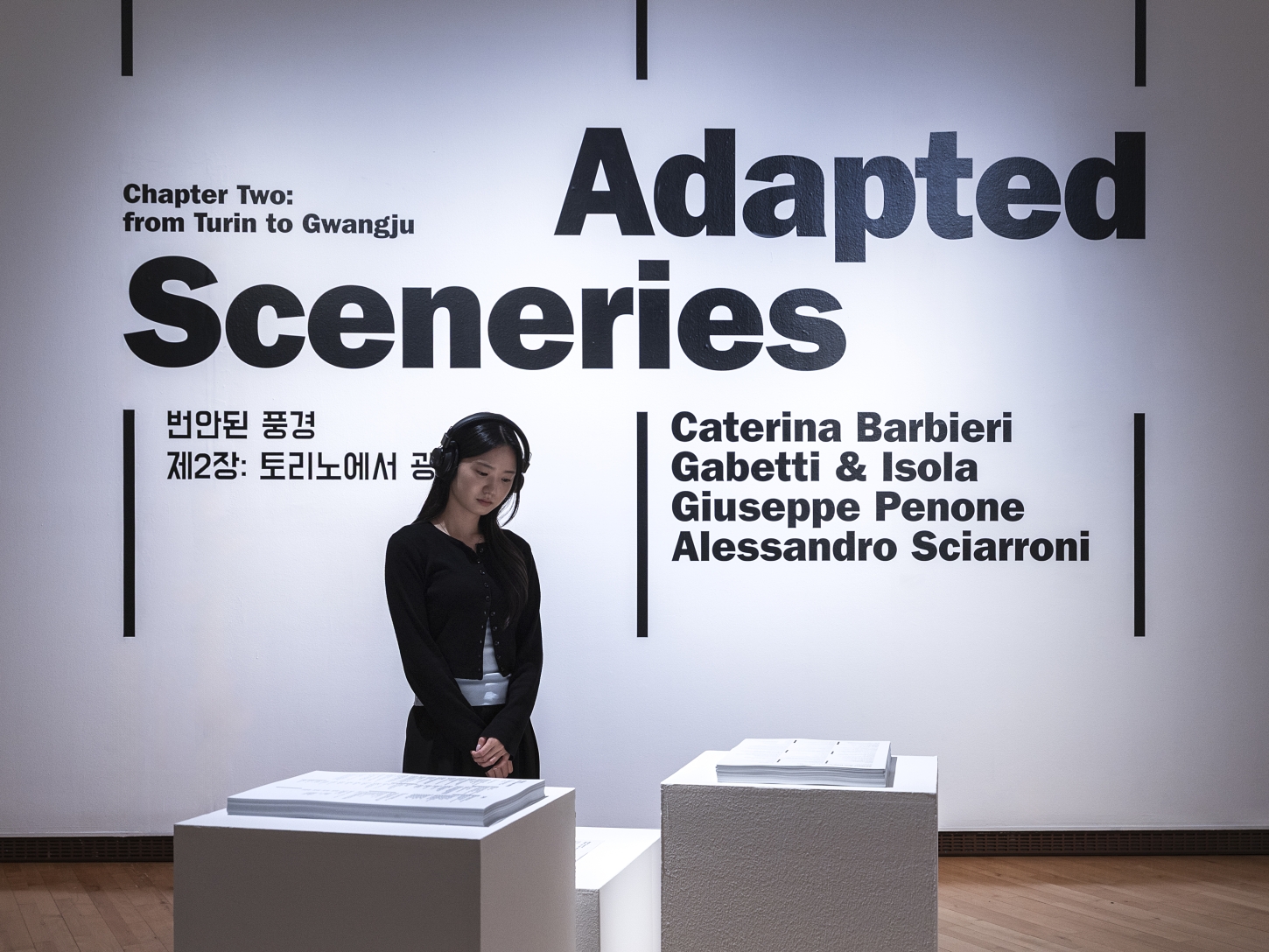
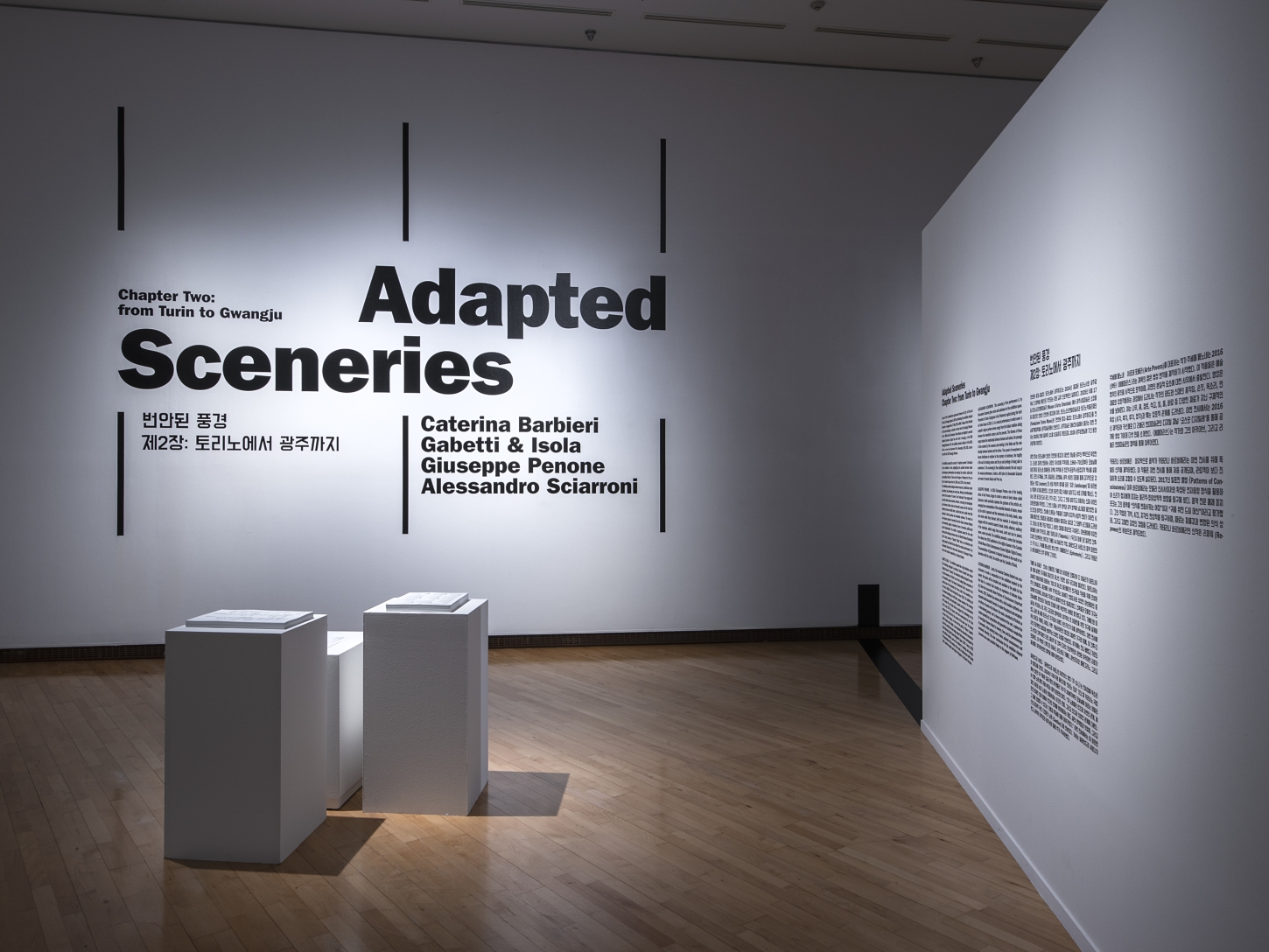
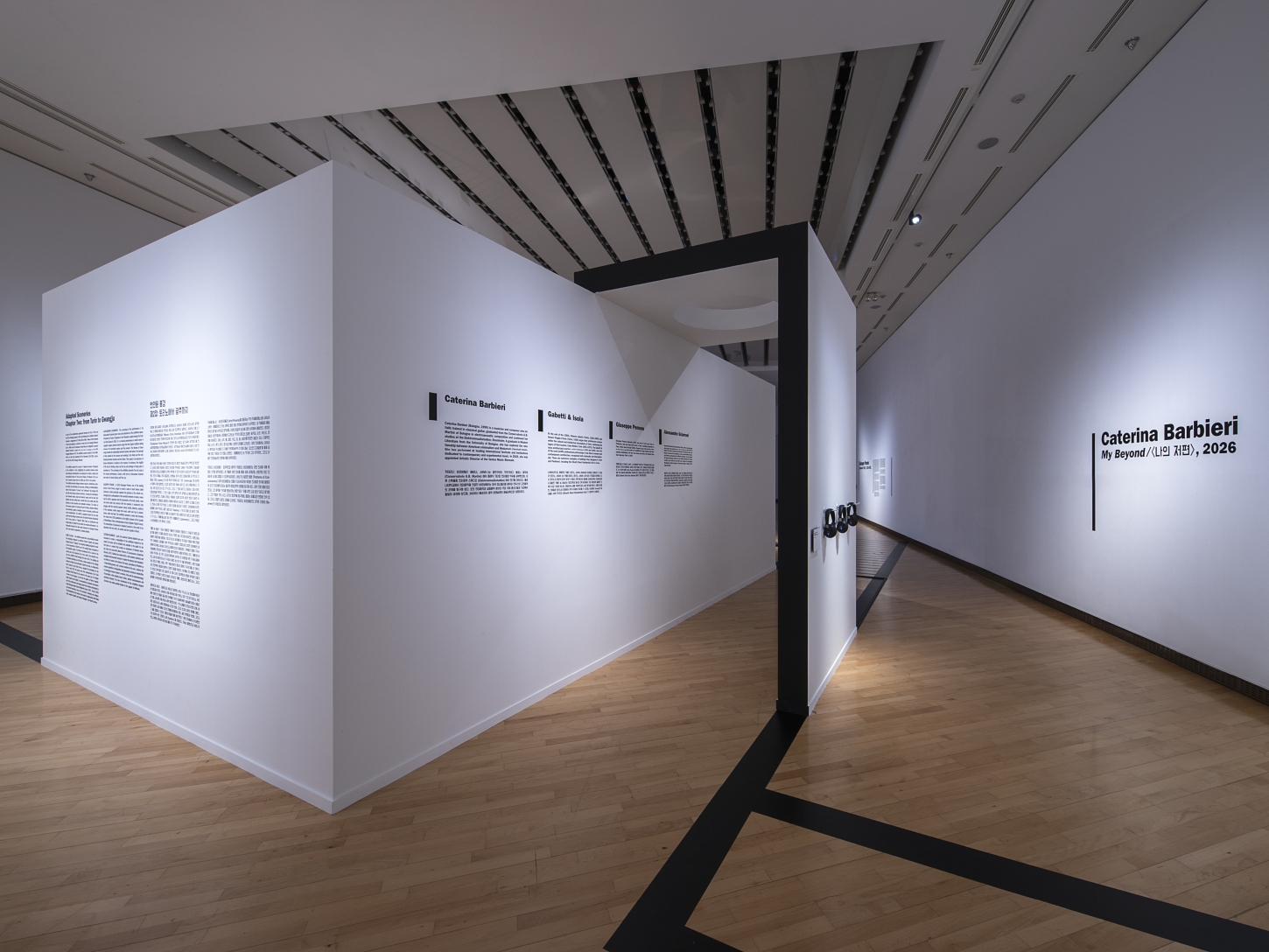
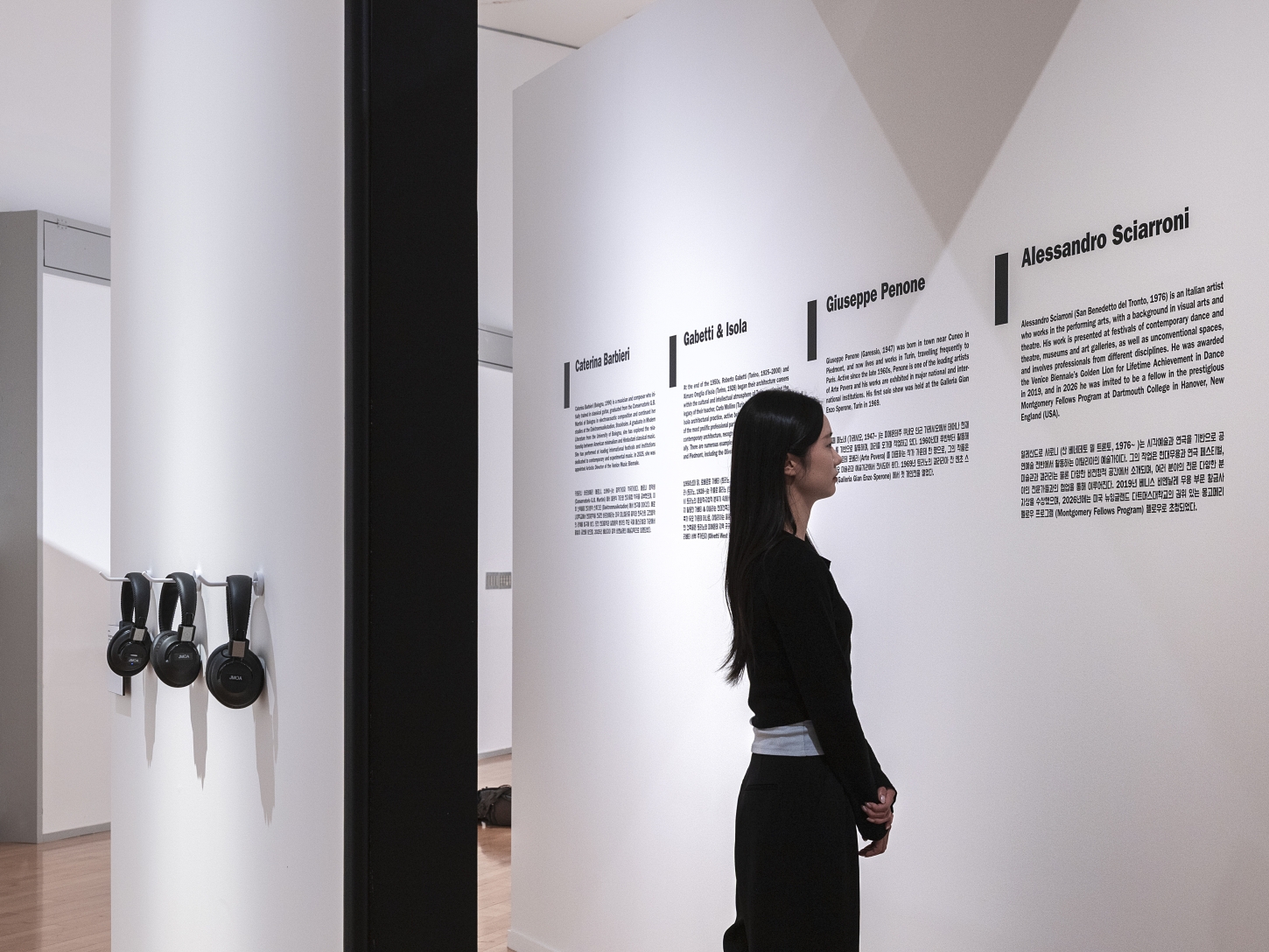
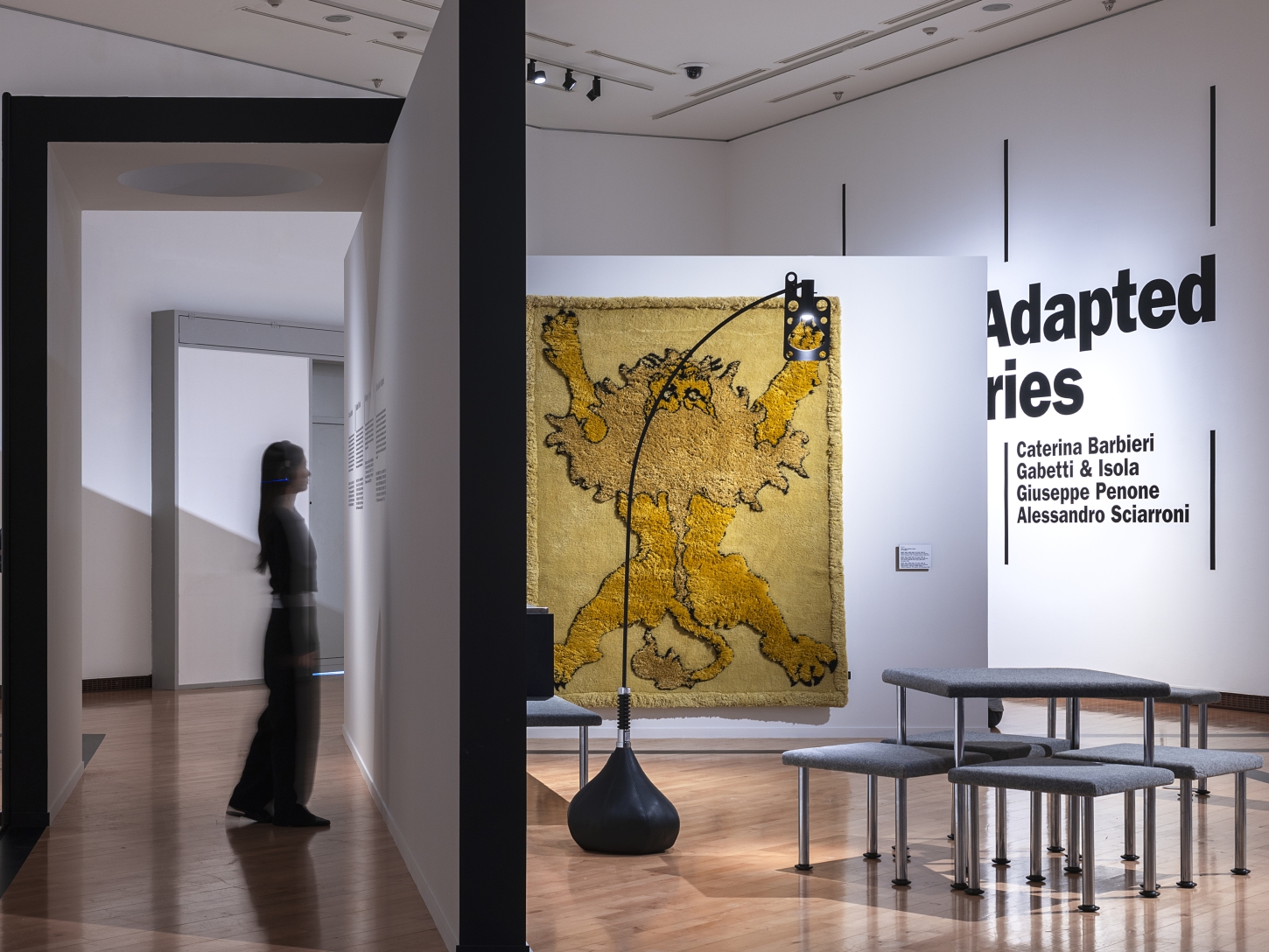
On the occasion of the 16th Gwangju Biennale – “You Must Change Your Life” – BRH+ designs the exhibition layout and visual identity for the group exhibition Adapted Sceneries at the GMA – Gwangju Museum of Art, featuring works by Caterina Barbieri, Gabetti & Isola, Giuseppe Penone and Alessandro Sciarroni.
The exhibition is the second chapter of Adapted Sceneries. Following the first iteration at the MAO – Museo d’Arte Orientale in Turin in 2025, which brought together a significant selection of works from the GMA collection, this second chapter traces the journey in the opposite direction, focusing on the artistic, cultural and socio-political history of Turin and Piedmont from the 1960s to the present day.
The theme of the landscape “in metamorphosis” runs through the project as a common thread, connecting two territories – Turin and Gwangju – geographically distant yet linked by profound processes of urban and social transformation and regeneration.
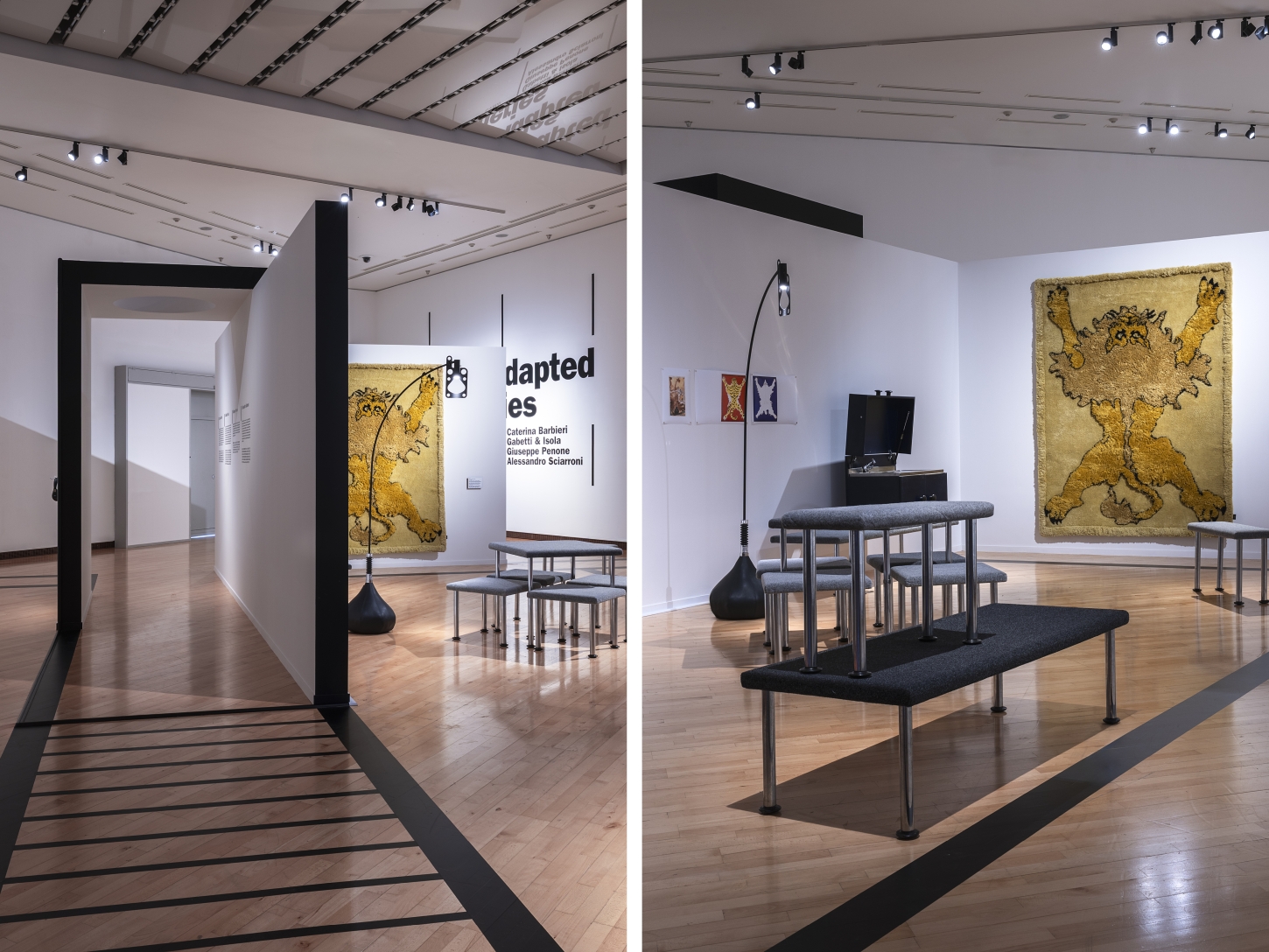
Within this context, BRH+ develops an exhibition device conceived to establish meaningful relationships between a selection of works by prominent Italian artists. Rather than dividing the exhibition into strictly separated sections, the project creates a sequence of situations and correspondences in which the different contents enter into dialogue and progressively establish connections.
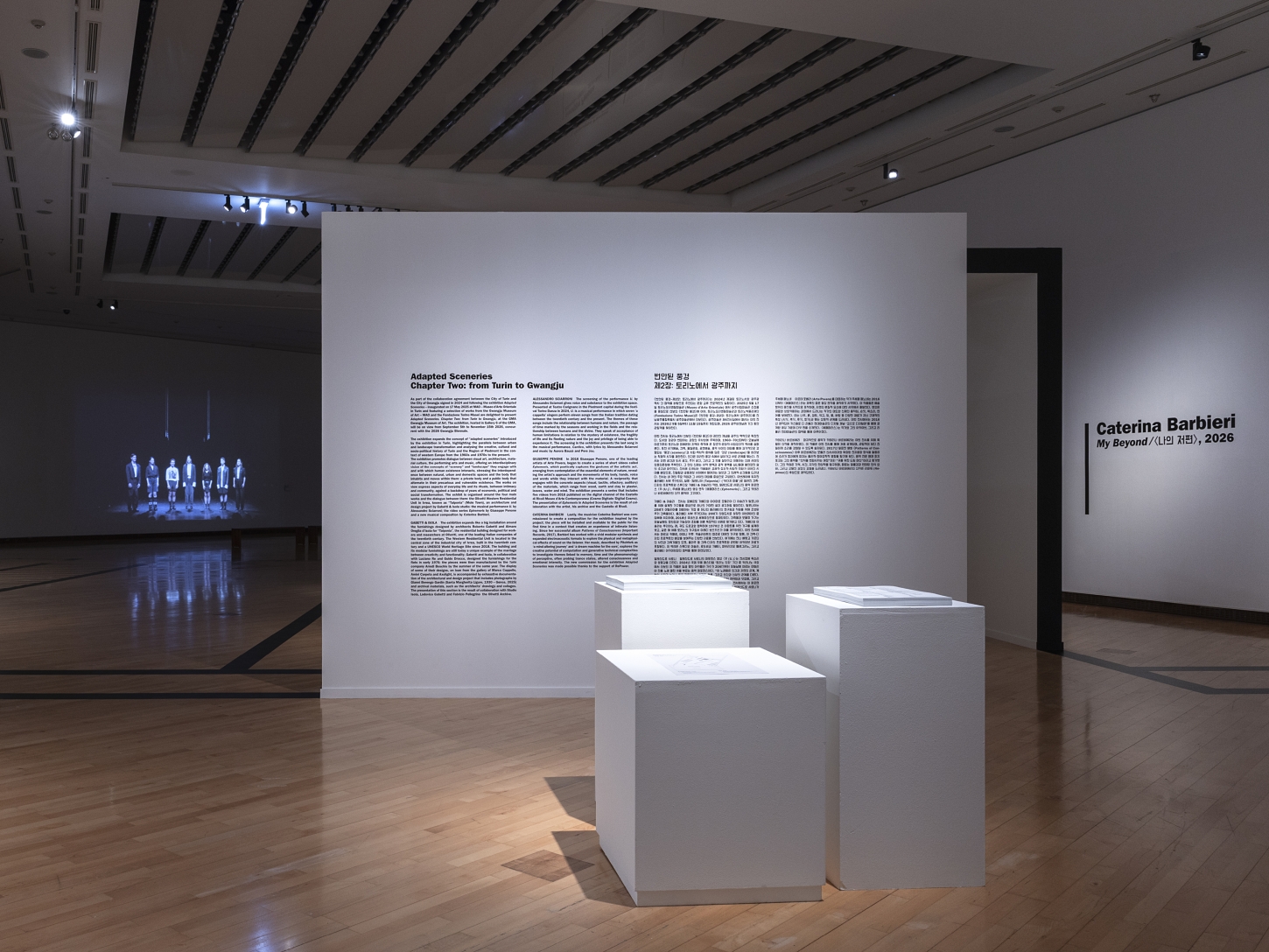
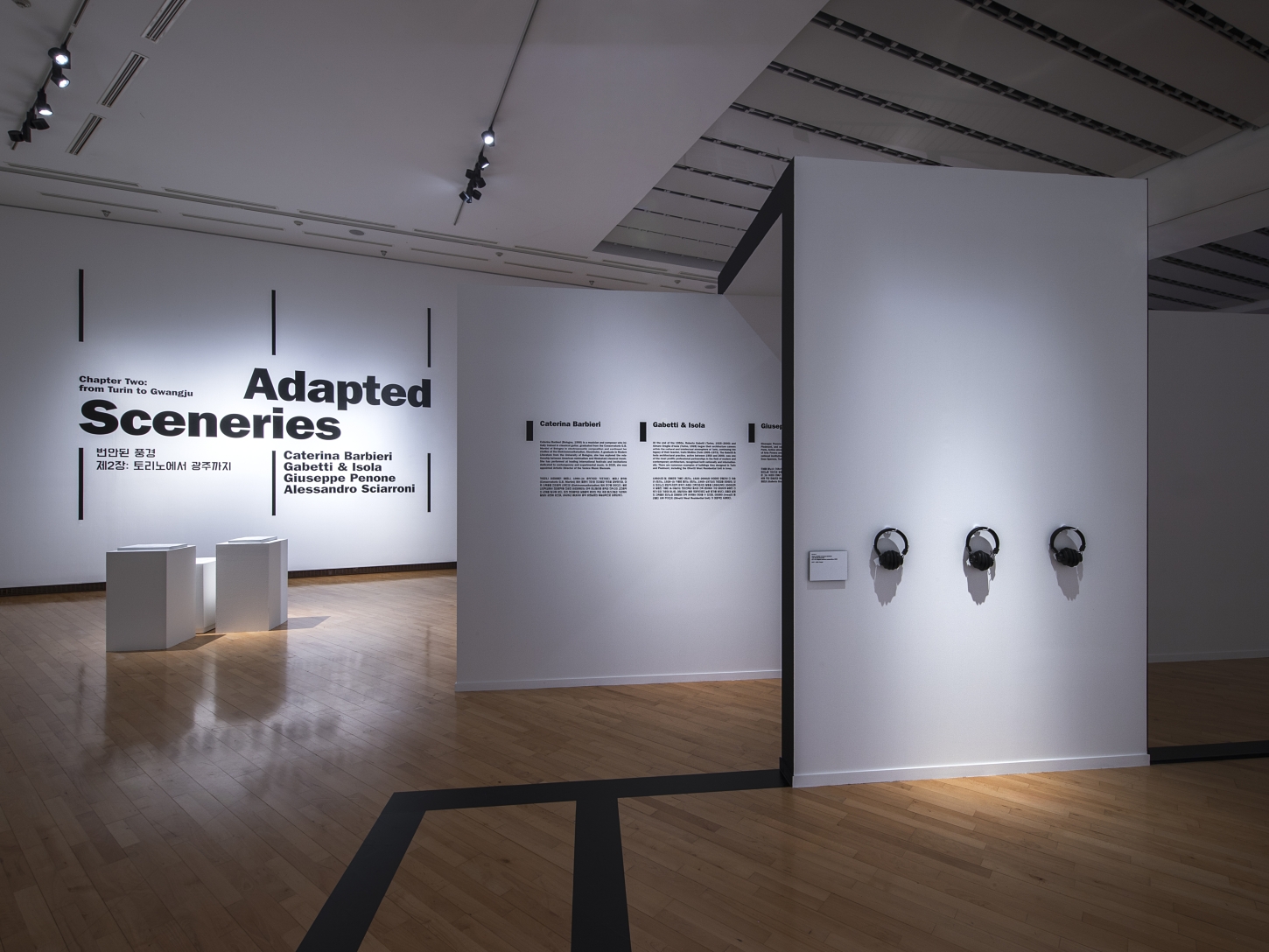
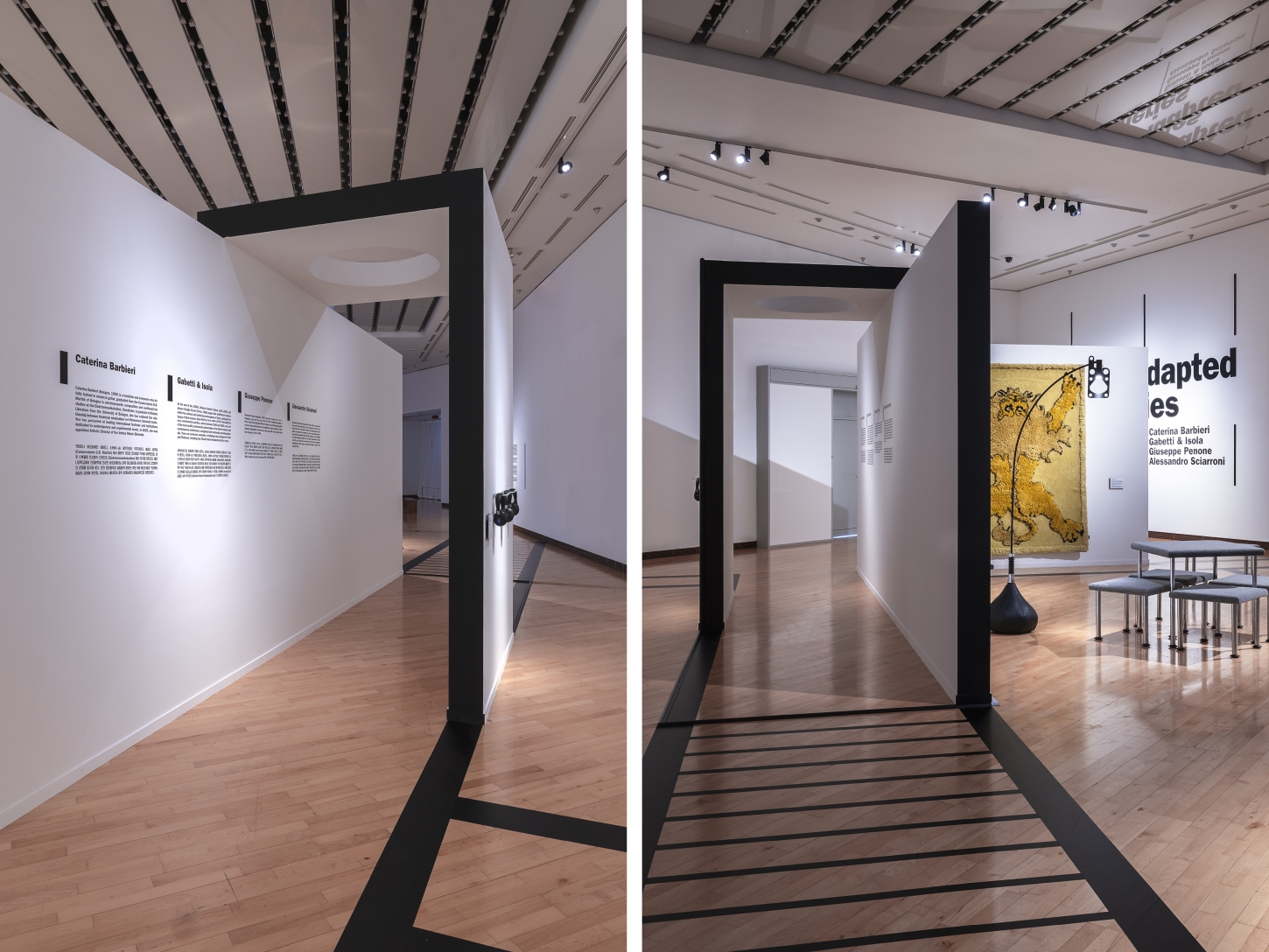
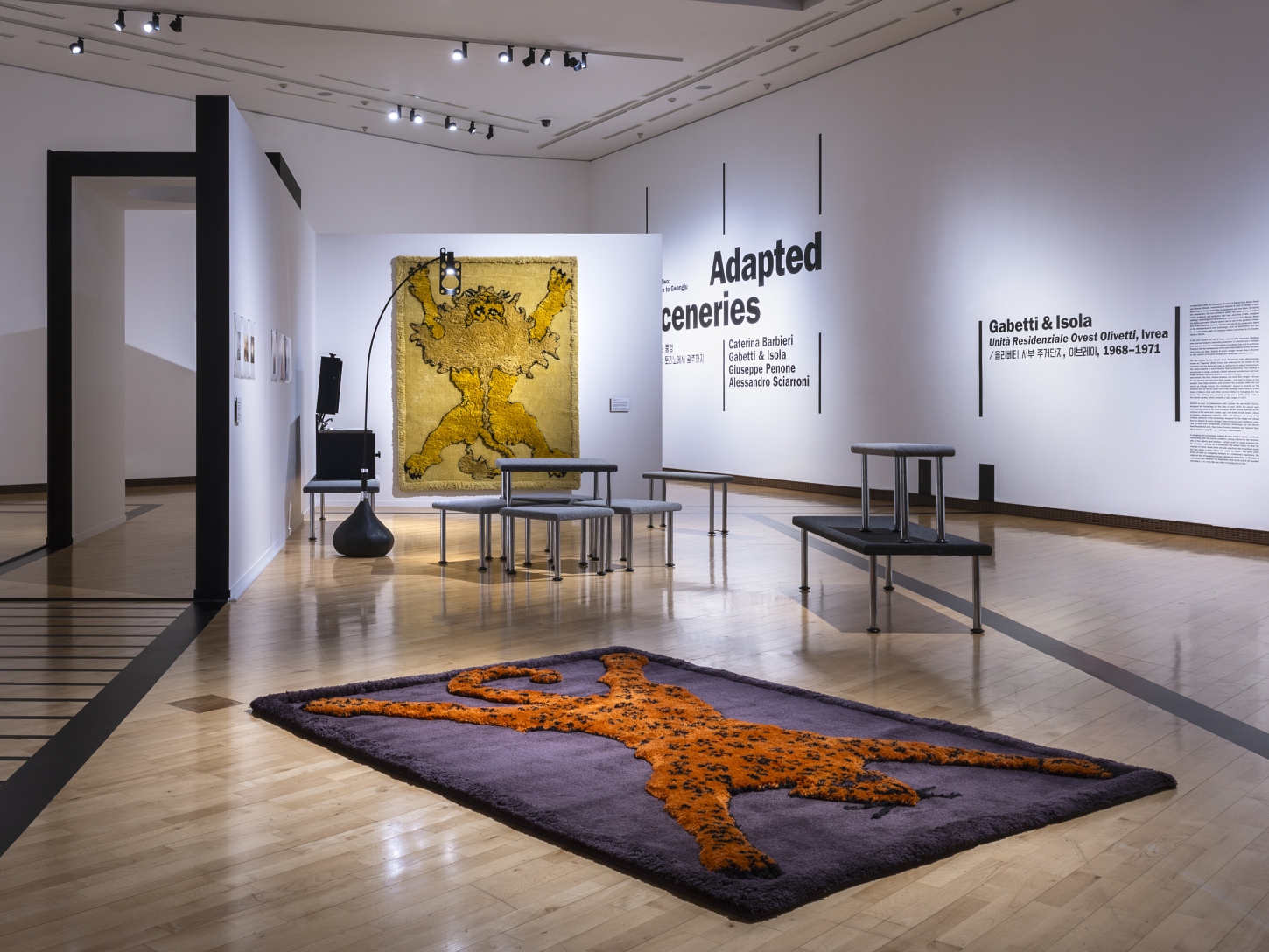
The exhibition layout thus takes on the character of a temporary landscape, where architectural elements do more than organise the visitor’s path: they contribute to a narrative built through juxtapositions, crossings and shifting viewpoints. Space becomes an integral part of the story, bringing the memory of industrial Turin into dialogue with the different ways in which the artists explore the relationship between human presence, the natural environment and the urban territory.
At the centre of the exhibition is a reconstruction of Roberto Gabetti and Aimaro Oreglia d’Isola’s project for Talponia, the residential complex built in Ivrea for Olivetti employees and researchers. Original furniture and selected re-editions, photographs by the renowned photographer Gianni Berengo Gardin, drawings, sketches and archival materials from the Gabetti and Isola Archive convey the complexity of a project in which architecture, work and quality of life were conceived as parts of a single system. Within the exhibition, Talponia provides a tangible point of reference, introducing the dimension of dwelling and territorial transformation. Its presence is brought into relation with the other contents of the exhibition, creating a passage between the history of the project and contemporary reflections on the landscape.
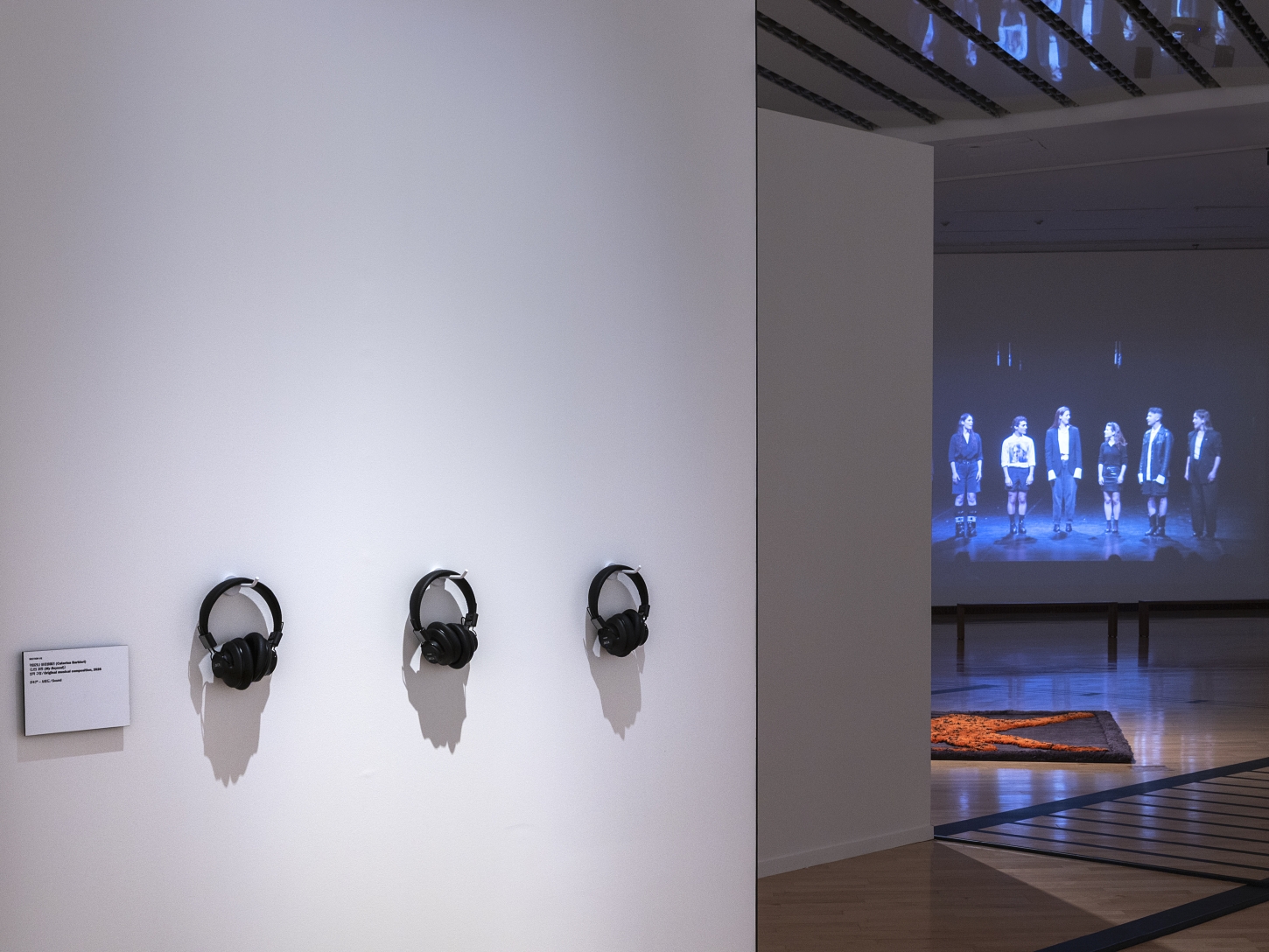
The other elements of the exhibition unfold around this central nucleus. Alessandro Sciarroni’s performance U., presented through the video projection of Cantico, introduces a performative and corporeal dimension. Giuseppe Penone’s Ephemeris video series shifts the focus towards the relationship between body, matter and nature. The exhibition is completed by a new sound composition commissioned from Caterina Barbieri, conceived specifically for the project and designed to create an immersive audio experience.
The plurality of languages – architecture, photography, visual art, video, performance and music – is therefore treated by the exhibition layout as the material of the project itself. Rather than constructing a succession of autonomous environments, BRH+ works with their coexistence, creating a context in which the different layers of the narrative can overlap and generate new associations.
The result is an exhibition space in which the architectural dimension remains deliberately open to interpretation: a device capable of accommodating different contents without imposing a single hierarchy, accompanying visitors through a reflection on the landscape as the outcome of successive transformations, layers and forms of inhabitation.
Adapted Sceneries. Chapter Two: from Turin to Gwangju emerges from the cultural dialogue established between Turin and Gwangju through the cooperation agreement signed by the two cities in 2024, and forms part of the Fondazione Torino Musei’s internationalisation programme. The exhibition at the Gwangju Museum of Art is therefore not only the continuation of an exhibition project, but also an opportunity for exchange between two territories whose histories have been shaped by profound industrial, urban and cultural transformations.
Curated by
Davide Quadrio e Anna Musini
In collaboration with BRH+
A collaboration between
MAO – Museo d’Arte Orientale di Torino
Fondazione Torino Musei
Gwangju Museum of Art
Pictures
© Youngtae Kim
On the occasion of the 16th Gwangju Biennale – “You Must Change Your Life” – BRH+ designs the exhibition layout and visual identity for the group exhibition Adapted Sceneries at the GMA – Gwangju Museum of Art, featuring works by Caterina Barbieri, Gabetti & Isola, Giuseppe Penone and Alessandro Sciarroni.
The exhibition is the second chapter of Adapted Sceneries. Following the first iteration at the MAO – Museo d’Arte Orientale in Turin in 2025, which brought together a significant selection of works from the GMA collection, this second chapter traces the journey in the opposite direction, focusing on the artistic, cultural and socio-political history of Turin and Piedmont from the 1960s to the present day.
The theme of the landscape “in metamorphosis” runs through the project as a common thread, connecting two territories – Turin and Gwangju – geographically distant yet linked by profound processes of urban and social transformation and regeneration.
Within this context, BRH+ develops an exhibition device conceived to establish meaningful relationships between a selection of works by prominent Italian artists. Rather than dividing the exhibition into strictly separated sections, the project creates a sequence of situations and correspondences in which the different contents enter into dialogue and progressively establish connections.
The exhibition layout thus takes on the character of a temporary landscape, where architectural elements do more than organise the visitor’s path: they contribute to a narrative built through juxtapositions, crossings and shifting viewpoints. Space becomes an integral part of the story, bringing the memory of industrial Turin into dialogue with the different ways in which the artists explore the relationship between human presence, the natural environment and the urban territory.
At the centre of the exhibition is a reconstruction of Roberto Gabetti and Aimaro Oreglia d’Isola’s project for Talponia, the residential complex built in Ivrea for Olivetti employees and researchers. Original furniture and selected re-editions, photographs by the renowned photographer Gianni Berengo Gardin, drawings, sketches and archival materials from the Gabetti and Isola Archive convey the complexity of a project in which architecture, work and quality of life were conceived as parts of a single system. Within the exhibition, Talponia provides a tangible point of reference, introducing the dimension of dwelling and territorial transformation. Its presence is brought into relation with the other contents of the exhibition, creating a passage between the history of the project and contemporary reflections on the landscape.
The other elements of the exhibition unfold around this central nucleus. Alessandro Sciarroni’s performance U., presented through the video projection of Cantico, introduces a performative and corporeal dimension. Giuseppe Penone’s Ephemeris video series shifts the focus towards the relationship between body, matter and nature. The exhibition is completed by a new sound composition commissioned from Caterina Barbieri, conceived specifically for the project and designed to create an immersive audio experience.
The plurality of languages – architecture, photography, visual art, video, performance and music – is therefore treated by the exhibition layout as the material of the project itself. Rather than constructing a succession of autonomous environments, BRH+ works with their coexistence, creating a context in which the different layers of the narrative can overlap and generate new associations.
The result is an exhibition space in which the architectural dimension remains deliberately open to interpretation: a device capable of accommodating different contents without imposing a single hierarchy, accompanying visitors through a reflection on the landscape as the outcome of successive transformations, layers and forms of inhabitation.
Adapted Sceneries. Chapter Two: from Turin to Gwangju emerges from the cultural dialogue established between Turin and Gwangju through the cooperation agreement signed by the two cities in 2024, and forms part of the Fondazione Torino Musei’s internationalisation programme. The exhibition at the Gwangju Museum of Art is therefore not only the continuation of an exhibition project, but also an opportunity for exchange between two territories whose histories have been shaped by profound industrial, urban and cultural transformations.
Curated by
Davide Quadrio e Anna Musini
In collaboration with BRH+
A collaboration between
MAO – Museo d’Arte Orientale di Torino
Fondazione Torino Musei
Gwangju Museum of Art
Pictures
© Youngtae Kim